Guides
One hard week to handle a risky enterprise discount
A one‑week playbook to turn a risky enterprise discount ask into a controlled, measurable experiment that protects self‑serve pricing.
5 MIN READLinkedIn ↗X ↗

This guide is for product managers who balance self‑serve growth with reactive sales asks. On Friday, you will have a decision backed by data, a contained pilot (or a clear no), and rules that protect your price architecture. You will do it in one hard week.
In brief
- Treat the discount ask as a product experiment with a hypothesis and success metrics.
- Map who and what the change touches: self‑serve, sales, support, finance.
- Run a timeboxed pilot with eligibility, gating, instrumentation, and an exit rule.
- Use three levers: feature gates, contract anchors, channel rules.
- Decide on Friday: scale, iterate, or roll back.

The hard week plan
Mon
Surface the ask and set the bar
- State the risk: cannibalisation, confused packaging, and heavy SLAs.
- Require a hypothesis and success metrics before work starts.
- Agree what will not change this week: list price, core entitlements, billing model.
Tue
Map impact and define metrics
- Trace affected journeys: self‑serve, sales, support, finance.
- Identify where cannibalisation could land and what it would look like.
- Choose leading indicators to collect in‑week; define lagging ones to read later.
Wed
Prototype offer and controls
- Draft contract anchors: list price, conditional discount, and terms.
- Set feature gates so core stays paid and controlled.
- Write channel rules: who can offer what, and where.
Thu
Launch a controlled pilot
- Timebox the pilot. Train the specific reps. Turn on instrumentation.
- Enable support and finance on the exceptions you expect.
- Start a live log of offers, wins, and losses.
Fri
Evaluate and decide
- Check pilot data and adherence to rules.
- Apply win/loss criteria and exit rule.
- Decide: continue, adjust, or roll back.
Why a discount ask is a product problem
A new, discounted enterprise tier looks like a quick path to close a deal. It can also erode self‑serve revenue, blur your packaging, and set SLAs your teams cannot meet. It touches the product, sales, support, and finance. That makes it a product change. Treat it like one. Write a hypothesis. Define success and failure. Limit scope. Measure.
Your guardrails
- Evidence over anecdotes.
- Core value stays paid.
- Discounts are conditional and reversible.
- Channels have rules.
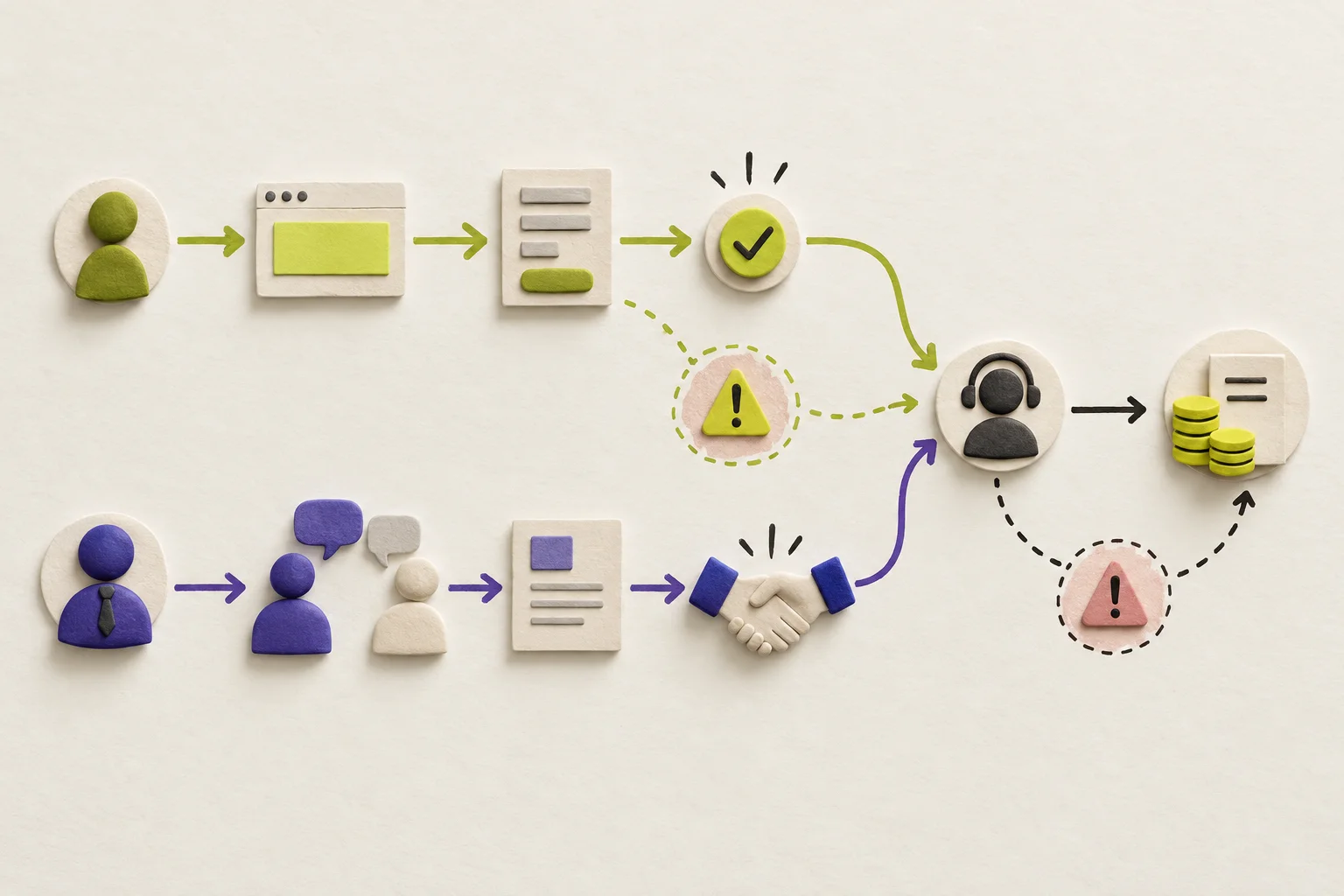
Tuesday’s work: the impact map and metric plan
- Self‑serve: where does the discounted tier create confusion on your pricing page or in‑product upsell? What would a cannibalised path look like?
- Sales: who qualifies to offer the discount? What proof do they collect? How do you log offers and outcomes?
- Support: what SLAs are implied? What volumes change if large accounts use channels meant for self‑serve?
- Finance: how are list price and discount shown on the order form? How do approvals and renewals work?
Three levers you will use
Feature gates
Keep core in the paid tier. Gate advanced features so the discount does not hand out broad entitlements. This limits cannibalisation and support load.
Contract anchors
Start from list price on the order form. Add a conditional discount with clear triggers and an expiry. This sets expectations and keeps the baseline visible.
Channel rules
Define who may offer what, and through which channel. Keep self‑serve messaging consistent. Do not let marketing blur the rules.
| Concession | Controlled pilot |
|---|---|
| Say yes in the meeting | Require hypothesis and metrics first |
| Permanent discount | Timeboxed, conditional discount with exit rule |
| Vague messaging across channels | Clear channel rules and training |
| No instrumentation | Event logging and offer tracking from day one |
| Price architecture drifts | Feature gates keep core paid and stable |
Wednesday’s work: prototype the contract and gating
Draft a one‑page offer sheet for the pilot. Show list price, the conditional discount, eligibility, and the SLA terms the buyer must accept. Add a short playbook for reps: qualifying questions, approved talk tracks, and how to log each offer. In product, set gates so only the pilot accounts see the added entitlements. Keep self‑serve pricing unchanged.

Thursday’s work: launch the pilot and train sales
Train the specific sales reps who can run the pilot. Walk through eligibility, how to present list price and discount, how to position feature gates, and what not to promise. Align support on the SLAs and escalation path. Align finance on how the order is booked, how the discount appears, and renewal handling. Turn on logging for offers, wins, and losses. Start a daily stand‑up to resolve issues fast.
Checklist for launch day
- Eligibility criteria in writing and visible to reps.
- Order form with list price and conditional discount.
- Feature flags and gates on for pilot accounts only.
- Events logging: offers, acceptances, declines, breaches.
- Support and finance runbooks updated.
- Exit rule documented and owned.
Friday’s work: evaluate and decide
Bring the team together. Review the pilot log, adherence to rules, and the early signals. Did any self‑serve paths drop or get confused? Did any offers go out of bounds? Apply your win/loss criteria. If criteria are met and the risks look contained, continue the pilot with the same controls. If not, roll it back per the exit rule. Document the call and what you learned.
Worked example
The ask
Sales wants a 30% enterprise discount for bulk seats.
Pilot setup
Eligibility: more than 500 seats, 90‑day trial, signed SLA opt‑in, tracked conversions and churn. Contract anchors: list price plus a conditional 30% discount stated on the order form. Feature gates keep core value in the paid tier; added entitlements are limited to the pilot accounts. Channel rules: only named enterprise reps may offer it; self‑serve channels do not mention it.
Metrics and criteria
Success equals ARPA lift of at least 10% at six months and no retention drop in self‑serve cohorts. Exit rule: if rules are breached or the early signals point to self‑serve cannibalisation, the offer is withdrawn at once and pricing reverts to list.
Mistakes to avoid
- Saying yes in the meeting.
- Omitting instrumentation.
- Treating discounts as permanent.
- Letting marketing blur channel rules.
- Not setting an automatic rollback.
Why this week works
This approach forces evidence before commitment. It protects your price architecture because core stays gated and list price stays visible. It limits operational debt by setting who can do what and by how much, and it gives sales a path to move a deal without changing your product economics. Most of all, it puts the decision on Friday, not on Monday in a room.
Filed under Guides