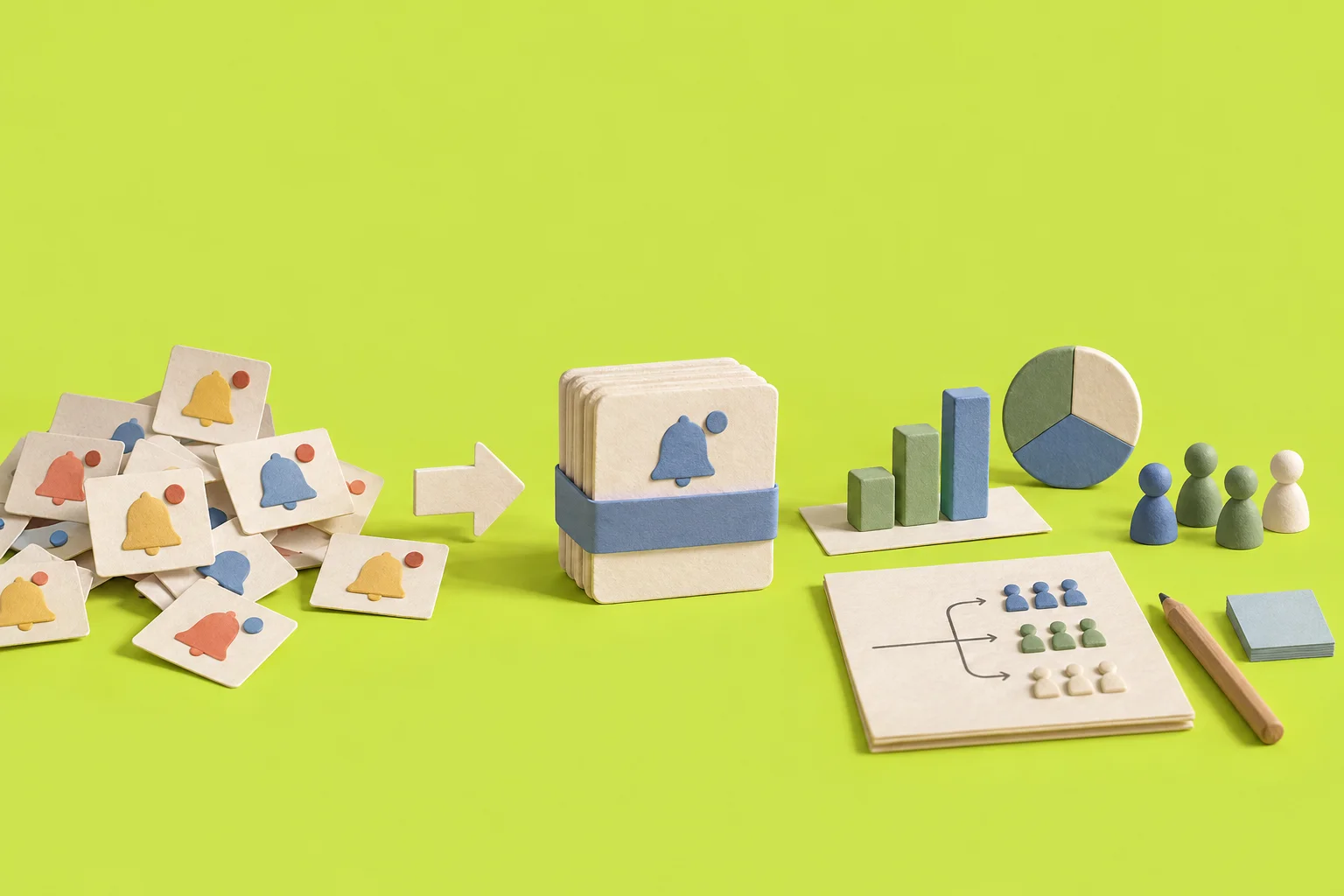
When Prompts Become Product: A Hard Week Plan
A one‑week plan to treat prompts and context as product surfaces, not engineering knobs, with experiments, telemetry, and a worked example.
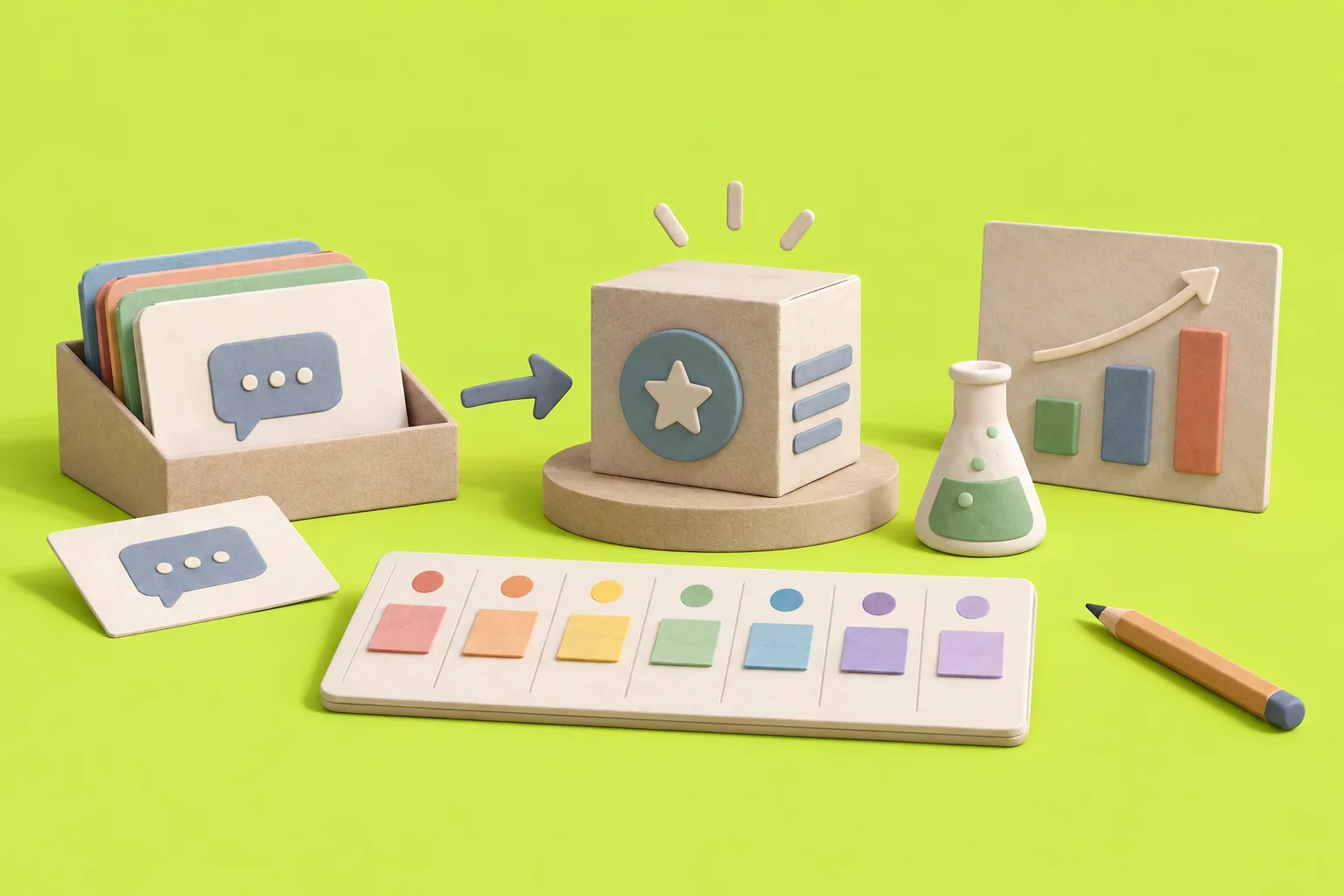
If prompts and context live as implementation details, they drift. They leak cost. They change UX and metrics without a ticket. Treat them as product surfaces and you can ship faster, safer, and cheaper on purpose.
Who this is for, and what you will have by Friday
This guide is for product managers shipping LLM-powered features: in-app assistants, meeting summaries, scoring, and personalization. By Friday, you will have:
- A prompt and context map tied to user outcomes and token cost
- Two prompt variants with a clear goal, guardrails, and ownership
- Feature flags, prompt versioning, and deterministic context hashes in telemetry
- An experiment that measures marginal user value per token (or per call)
- A decision on context-cost trade-offs you can defend
- Prompts and context change behavior, pricing, trust, and metrics like any UI change.
- Make prompt variants first-class in your roadmap with goals and guardrails.
- Measure marginal user value per token; watch cohort leakage and privacy drift.
- Version prompts, ship behind flags, record context hashes for attribution and rollback.
- Treat context-cost trade-offs as a feature decision, not a runtime afterthought.
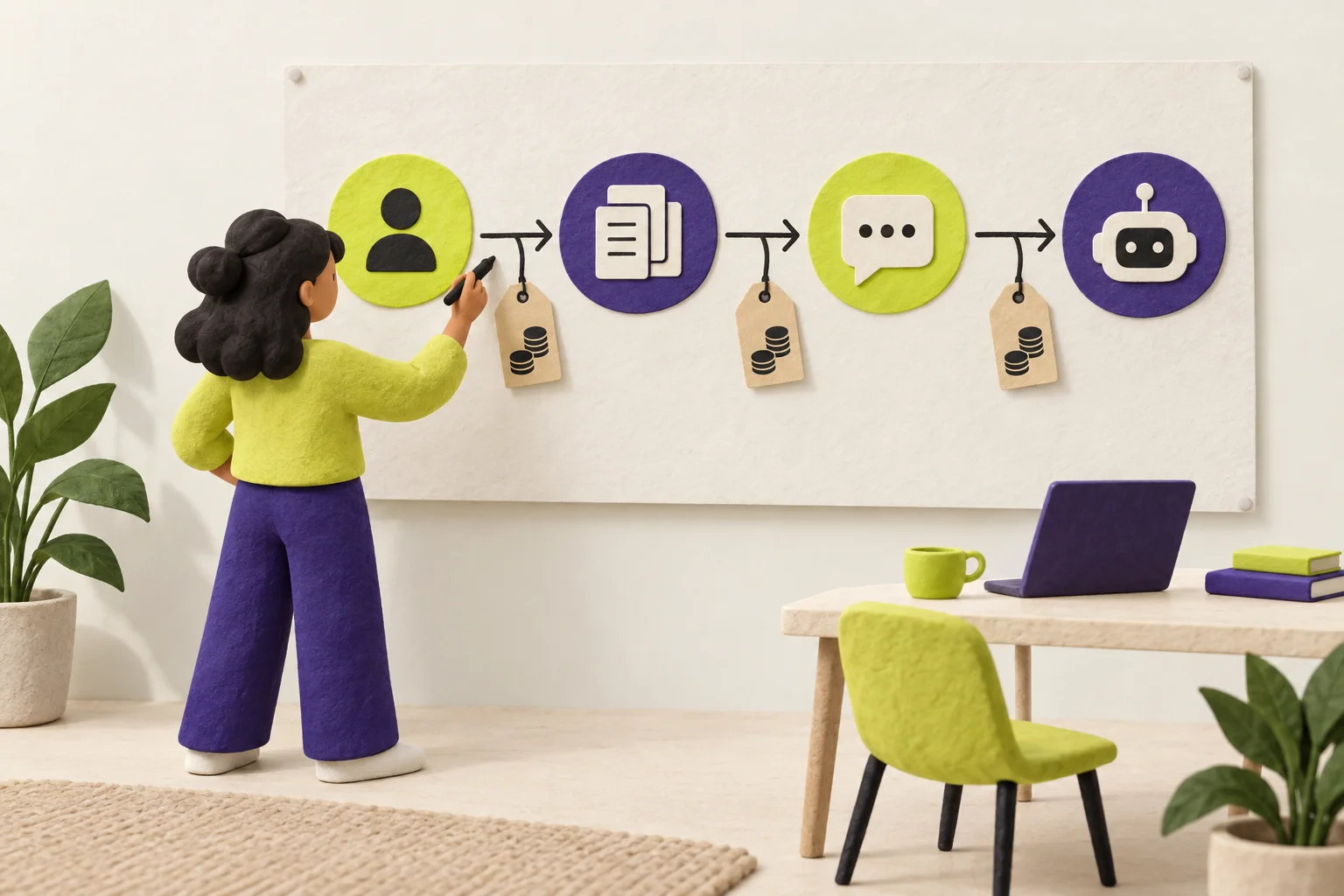
Prompts and context are product surfaces
Change the prompt, and you change outcomes, latency, safety risk, observability, and unit economics. That is a product change. Treat it like one.
Your hard week plan
Map prompts to outcomes and cost
- List every LLM call. For each: inputs, context sources, prompt template.
- Attach one measurable outcome metric per call (success, adoption, CSAT).
- Estimate expected tokens per call for prompt and context; note latency bands.
- Set target cost per call and per active user, with a back-of-envelope ceiling.
Design two prompt variants
- Baseline fidelity vs cost-optimized variant. Define goal and non-negotiable guardrails.
- Write ownership: who can edit, review cadence, rollback path.
- Draft an experiment plan: primary metric, guardrails, and sample sizing method.
- Use an AI agent to draft and normalize variants fast.
Wire flags, versions, and telemetry
- Gate each variant behind a feature flag.
- Assign immutable prompt_version IDs.
- Compute a deterministic context_hash from ordered context IDs and versions.
- Log per-call: prompt_version, context_hash, tokens in/out, latency, user outcome.
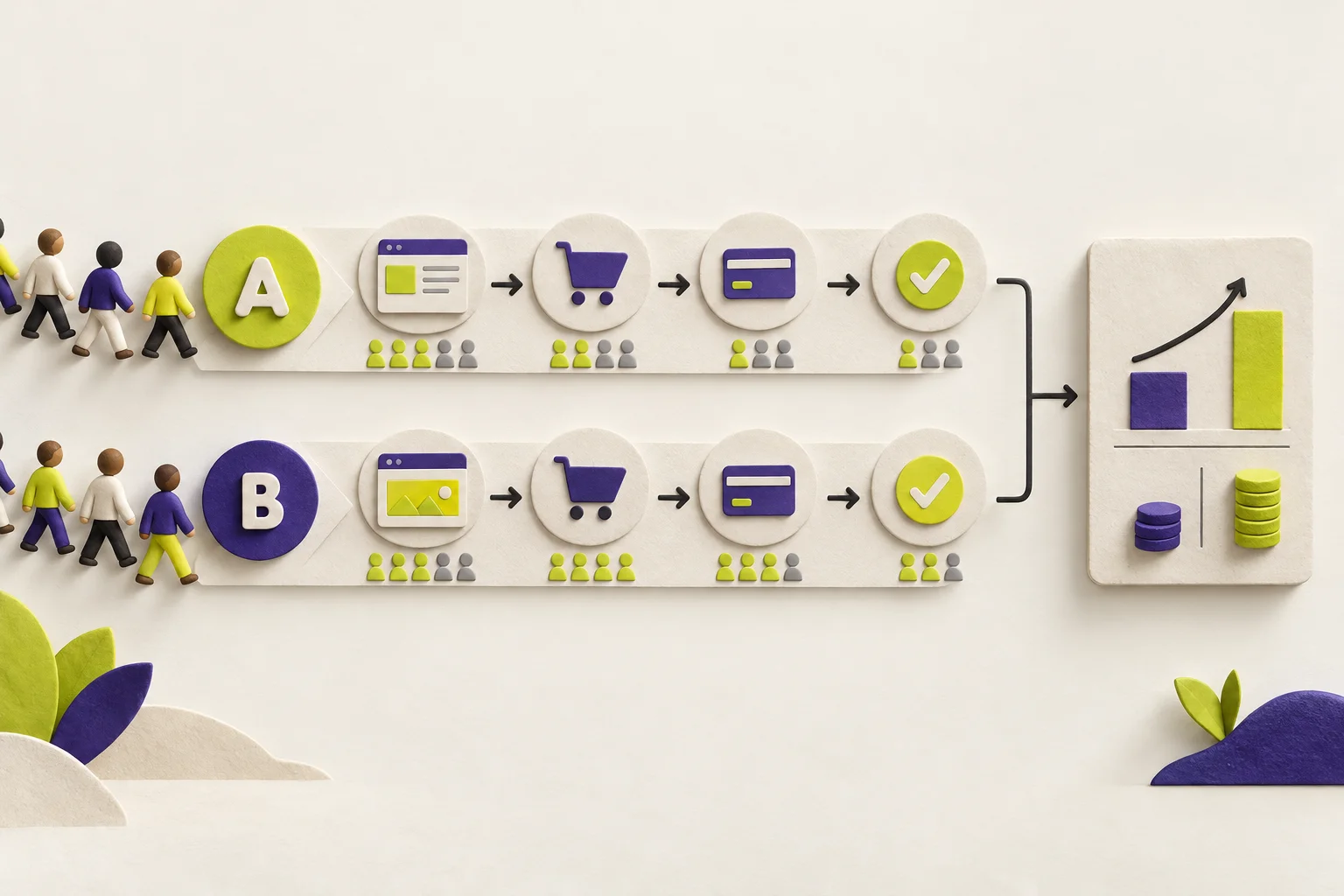
Run a targeted cohort A/B
- Target users with higher usage to reach power sooner.
- Monitor uplift, tokens per request, cost delta, and safety alerts daily.
- Check for cohort leakage and privacy drift in retrieved context.
- Decide: ship, iterate, or roll back. Document the change as a product decision.
Design experiments that price value per token
Price your changes in tokens or calls. Compare marginal user value per token between variants. Keep the math simple and the data fresh.
- Define the primary outcome (e.g., task completion rate) and a cost unit (tokens or calls).
- Compute delta outcome per extra token between variants.
- Set guardrails: safety flags, latency thresholds, and cost ceilings.
- Prevent cohort leakage: fix eligibility rules and stickiness for the week.
- Watch privacy drift: log sources and scopes of retrieved context.
Versioning and attribution you can roll back
Prompts drift when edits do not show up in metrics. Make variants addressable and attributable.
- Feature flags per variant. Default off until an owner flips them for a cohort.
- Immutable prompt_version string checked into config, not code comments.
- Deterministic context_hash joined into all product telemetry and BI tables.
- Dashboards faceted by prompt_version and context_hash for any outcome chart.
- Rollback is a flag change, not a redeploy.
Context-cost trade-offs are product choices
Tokens are not free. Treat context like any other input with a budget and a purpose. Decide when to truncate, when to retrieve, and when to cache.
| Decision | Baseline fidelity | Cost-optimized |
|---|---|---|
| Prompt length | Full instructions and rubrics | Trimmed instructions, defaults moved to code |
| Context strategy | Large, fixed transcript or document set | Retrieval for only relevant chunks; cache embeddings |
| When to truncate | Rarely; prefer fidelity | After top-k relevance; hard cap per call |
| Attribution | Log version; ad-hoc context notes | Log version plus deterministic context_hash |
| Measurement | Uplift only | Marginal value per token |
Choose based on measured marginal value, not preference. Cache where content repeats. Offload retrieval when context is large and sparse.
Worked example: meeting summaries in a B2B SaaS
Feature: in-product meeting summary. Average meeting minutes: 30. Transcript size: 4,500 tokens. Expensive detailed prompt uses 1,500 tokens + 2,000 context tokens = 3,500 tokens per call. At $0.002 per 1K tokens, cost ≈ $0.007 per summary. If ARPU/user/month is $20 and average summaries per user/month = 10, monthly cost/user = $0.07. Choose cost-optimized prompt trimmed to 1,200 tokens (cost $0.0024/month/user) if retention lift < 0.5% — otherwise keep fidelity prompt.
- Goal: Improve perceived quality without raising monthly cost above target.
- Guardrails: No hallucinated attendees; include action items only in verbatim transcript; latency under threshold you can support.
- Variants: Baseline fidelity (3,500 tokens per call) vs cost-optimized (trimmed prompt).
- Experiment: Target active users with higher meeting counts; measure task completion and CSAT with tokens per request.
- Telemetry: prompt_version, context_hash of transcript segments, tokens in/out, latency, outcome flags.
- Decision rule: If lift in retention is under 0.5%, pick cost-optimized; else keep fidelity.

Mistakes to avoid
- Shipping prompt tweaks without telemetry or a version ID.
- Coupling prompt content to UI copy so you cannot A/B cleanly.
- Ignoring cohort-specific needs (e.g., role-based prompts that vary by user type).
- Forgetting to log deterministic context hashes, which blocks attribution and rollback.
Make it stick
Keep prompts in your roadmap and review them with design and analytics. Treat tokens like a budget you allocate to user value. When you change prompts or context, write a ticket, run an experiment, and log versions and hashes. That is product work.