Build a 12‑Week Growth Portfolio for Senior PM Interviews
A step‑by‑step plan to run three short, measurable experiments and leave with interview‑ready impact stories in twelve weeks.

You want a senior title in the next 6–18 months. Panels ask for crisp impact stories. Most PM work is slow and shared. This guide gives you a 12‑week plan to run short, measurable experiments that turn into interview‑ready stories. By the end you will have three fresh examples, each with a decision memo, a before/after snapshot, and a simple timeline.
Principles that make this work
Build your 12‑week plan: the steps
State the title you’re aiming for and why. Pick a metric tied to revenue, retention, activation, or cost. Write the baseline you see today.
Output: a one‑line career goal and one target metric with baseline.
Each in one sentence: hypothesis, target metric, who decides, and the smallest artifact to show progress.
Screen out ideas that depend on other teams without a clear lever you own.
Score for: single metric, decision you own, visible artifact, 4–12 week timebox. Stack‑rank 1–3.
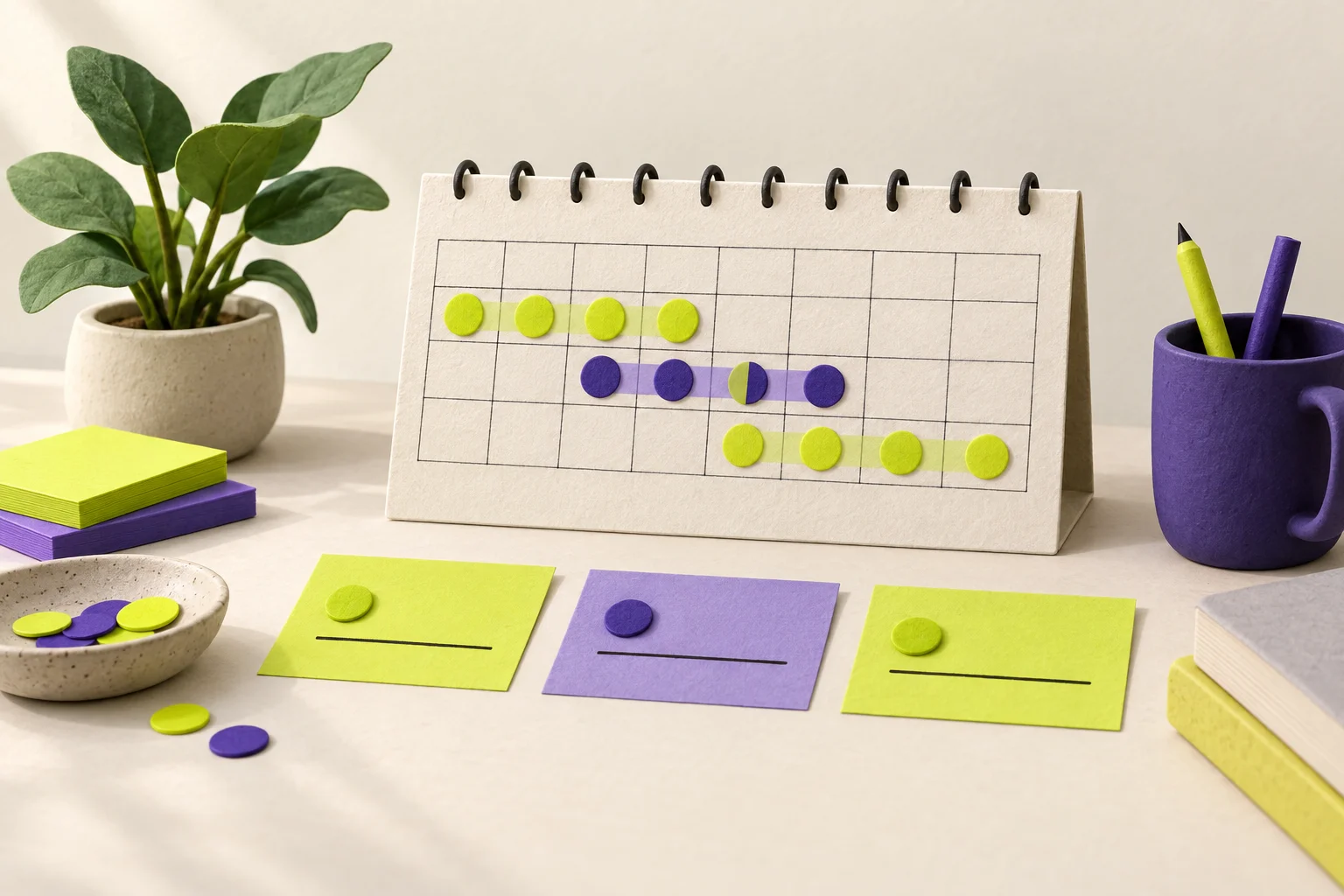
Set a rolling calendar: finish, mid‑run, seed.
Write a short brief: context, goal metric, baseline, hypothesis, constraints, plan, decision gates, risks. Keep it to one page.
Start the decision memo now. You will update it weekly.
Define events, cohorts, and the before/after snapshot. Check logs and dashboards. Confirm you can attribute lift to your change.
No instrumentation, no experiment.
Pilot with a clear cohort or segment. Timebox it. Track the single goal metric. Note constraints and surprises.
Keep a weekly note: what happened, what you’ll change.
Compare cohorts. Document the effect direction and confidence. Decide on rollout or next test. State trade‑offs you accept.
Update the memo with the decision and next steps.
Create the 1‑pager decision memo, the before/after snapshot, and a timeline slide. Save links to dashboards and release notes.
Repeat across three experiments for a complete portfolio.
What to choose: experiments vs busywork
| Good 4–12 week experiment | Weak busywork |
|---|---|
| One goal metric with a baseline and a target range. | Many metrics with no single outcome. |
| A decision you own at the end (ship, scale, or stop). | Work that depends on another team’s green light with no clear lever. |
| Visible artifacts: memo, release notes, dashboard links. | Meetings and syncs with no durable output. |
| External signal you can show (user cohort, support tickets trend, opt‑in rate). | Internal activity only (workshops, grooming, status docs). |
| Timeboxed with defined cohorts and guardrails. | Open‑ended scope with shifting goals. |
Two checklists you will reuse
- Goal metric and event definitions are written.
- Baseline snapshot is captured and saved.
- Cohorts are defined (who is in, who is out).
- Dashboards or queries exist to read results weekly.
- Release or feature flags let you control exposure.
- 1‑page decision memo (context, metric, hypothesis, constraints, outcome, learnings).
- Before/after metric snapshot with cohorts labeled.
- Simple timeline (weeks, actions, decision gates).
- Links to artifacts: PRD, release notes, dashboards.

Worked example: 12 weeks to lift trial → paid conversion
This is a B2B scenario. The target metric is trial‑to‑paid conversion rate. The baseline is your current observed rate. The single hypothesis: add a light, in‑trial task checklist to guide setup and value discovery.
Define the metric and its query. Capture the baseline. List stakeholders. Write the one‑page brief: context, goal, hypothesis, constraints, plan. Note risks (e.g., added friction). Decide the guardrails for success, and the decision gate at week 9.
Prototype the checklist inside the trial experience. Instrument start, task complete, and trial‑end events. Run an opt‑in pilot with 200 trials. Keep an opt‑out path. Log questions from users and support.
Compare cohorts (pilot vs. baseline or control). Segment by persona where you can. Update the decision memo with observed effect direction, confidence, and the rollout proposal. Record trade‑offs and any scope you are not doing.
Run a scaled pilot to a larger slice if the signal is positive. Prepare the interview artifacts: a one‑pager, a before/after cohort snapshot, and one slide on trade‑offs you owned. Write the next step: full rollout, iterate, or stop.
Your interview story becomes clear: the problem (low trial‑to‑paid), the hypothesis (guided checklist), causality (cohort comparison), the decision (scale or stop), and the next step (rollout plan or follow‑up test). You can show the memo, the snapshot, and the timeline. You can speak to constraints and trade‑offs you owned.

Run a rolling calendar
Do not run one big bet. Run three overlapping ones. Week by week, you want one experiment finishing, one mid‑run, and one seeding. This keeps momentum and gives you fresh examples when interviews come up. Put the decision gates on the calendar. Book brief stakeholder check‑ins at those gates.
Common mistakes and how to avoid them
Make it stick
Block two hours now. Write your one‑line career goal and pick one business metric. List five experiment ideas and select three. Start the first memo and the instrumentation checklist. If you track your growth plans, add this 12‑week arc to your Personal development plan. Keep it simple. Keep it moving.