The Myth of the Single Economic Buyer in B2B
Why winning one sponsor is not enough, and how to build a decision surface and modular close plan that clears security, procurement, and ops.

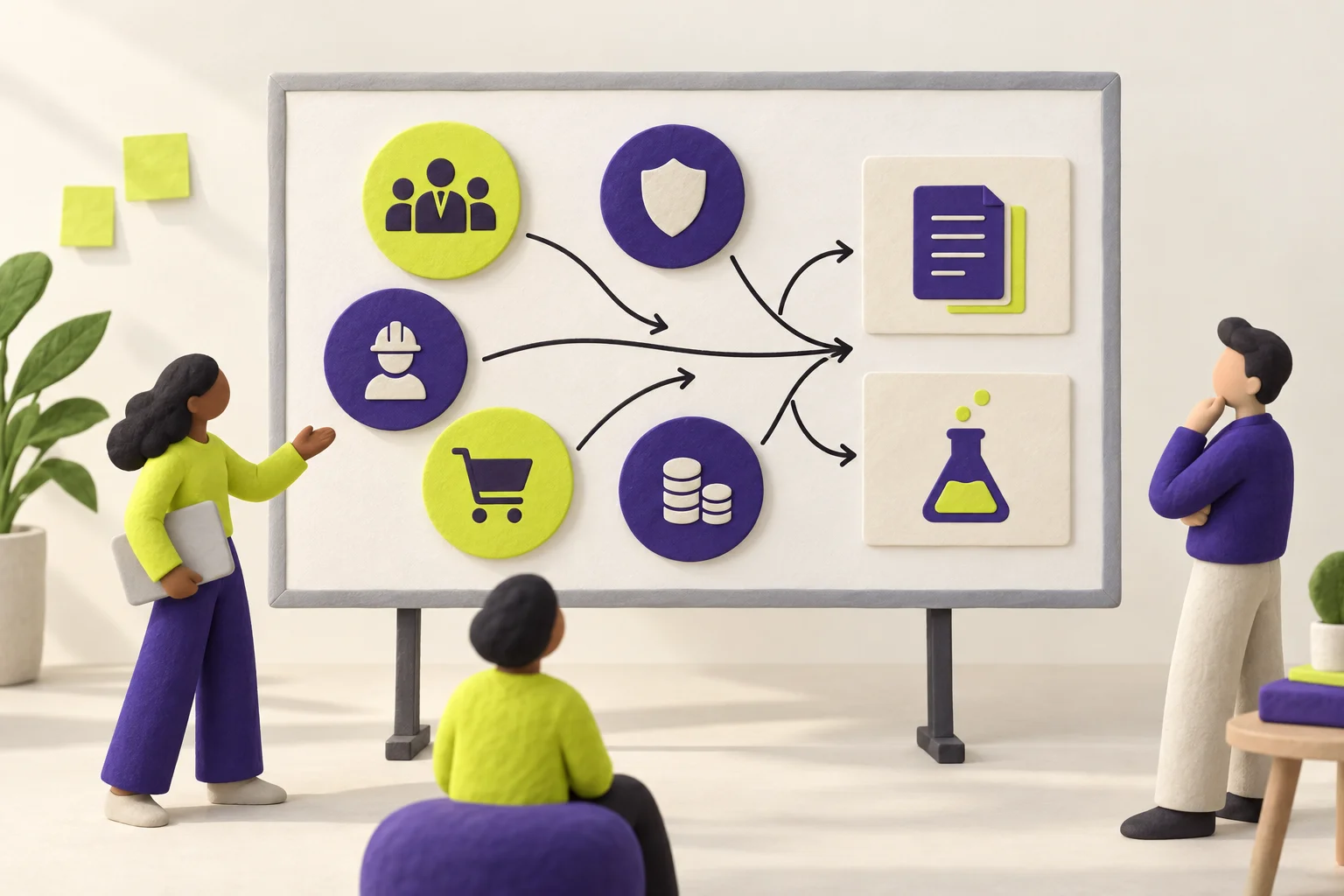
For PMs in B2B, a single executive sponsor often feels like the finish line. It is not. Committees, procurement, security, and operations carry the deal over the line. This guide is for product managers who build or sell products that land in that maze. At the end, you will have a decision surface for your buyer network and a modular close plan with clear artifacts and gated pilots.
- Myth: win the economic buyer and the deal is done. Reality: buyers are a network.
- Map stakeholders and their decision levers: risk, compliance, cost, integrations, timelines.
- Define the minimal artifacts each needs to say yes.
- Swap one big pitch for modular close steps tied to owners and deadlines.
- Pre-write procurement-friendly docs and run conditional pilots with measurable outcomes.

Myth vs reality
| Myth | Reality |
|---|---|
| One sponsor controls the budget and can say yes. | Budget approval is contingent on security, legal, ops, and finance sign-offs. |
| A powerful demo wins the room. | Checklists, SOWs, and acceptance criteria move contracts forward. |
| Procurement follows the business case. | Procurement follows policy and documented obligations. |
| Pilots are demos to impress execs. | Pilots are gated tests with pass/fail criteria and next steps. |
Steps to replace the myth with a working plan
List real people, not roles alone. Capture what they fear, how they decide, and where they can block. Expect different acceptance criteria.
- Stakeholders: business owner, InfoSec, procurement, IT ops, finance, legal, end users.
- Decision levers: risk, compliance, cost, integrations, timelines, support model.
Deliverable: a stakeholder map with owners and contact cadence.
For each stakeholder, define the minimal artifact that allows them to say yes. Keep it concrete and verifiable.
- InfoSec: security checklist and data flow diagram.
- Procurement: SOW with acceptance tests and service levels.
- Ops: integration spec and runbook outline.
- Finance: ROI method and total cost summary.
Summarise these on one page the sponsor can circulate. A concise One-pager helps.
Deliverable: a decision surface table linking people, levers, and artifacts.
Create small, sequential commitments tied to named stakeholders. Each module has inputs, outputs, and a deadline.
- Pilot SOW module
- Risk assessment module
- Integration spec module
- ROI memo module
Deliverable: a checklist of modules with owners and dates.
Draft SOWs, checklists, and acceptance criteria during discovery. Use clear obligations and pass/fail language.
- SOW: scope, responsibilities, milestones, acceptance tests.
- Security: questionnaire responses and evidence list.
- Ops: support hours, escalation, recovery expectations.
Deliverable: a ready-to-edit packet for legal and procurement.
Make the pilot a contract with measurable, low-risk outcomes for each stakeholder. Define the decision to proceed before the pilot starts.
- Scope: what is in and out.
- Measures: what you will track and how.
- Gates: pass/fail criteria and the next step if passed.
Deliverable: a pilot plan with metrics and a pre-agreed next step.
Checklist: before you pitch the exec again
- ▢Named owner for each stakeholder, with contact plan.
- ▢Decision levers captured and documented.
- ▢Draft SOW including acceptance tests and service levels.
- ▢Security questionnaire prefilled and evidence list prepared.
- ▢Integration spec and data flow diagram reviewed with ops.
- ▢Pilot metrics and pass/fail gates agreed in writing.
- ▢ROI memo with method and assumptions, not promises.
- ▢Known red lines and alternates (e.g., sandbox before prod).
- ▢Timeline with handoffs across teams.
- ▢Updated one-page summary in circulation.
Worked example: analytics dashboard for a mid-sized bank
You offer an analytics dashboard. A mid-sized bank is interested. A sponsor likes the insights. The deal stalls unless InfoSec, procurement, ops, and finance can say yes.
- Product Owner (business): wants useful insights and adoption.
- InfoSec: cares about data handling and access control.
- Procurement: enforces policy and contract clarity.
- Ops (IT): needs stable integrations and a runbook.
- Finance: needs a clear ROI method and cost profile.
- Product Owner: adoption plan; pilot success criteria tied to use cases.
- InfoSec: security checklist; data flow diagram; access model.
- Procurement: SOW with scope, obligations, and acceptance tests.
- Ops: integration spec; sandbox plan; runbook outline.
- Finance: ROI memo with method; total cost breakdown.
- Sandbox integration. Connect to a non-production dataset. Limit scope to a few key dashboards. Deliver an integration spec and a draft runbook.
- Security attestation. Complete the bank’s security questionnaire and provide evidence. Prove role-based access works in the sandbox.
- 90-day ROI proof. Track agreed metrics over 90 days. Use the ROI method defined with finance. Prepare a summary memo that ties outcomes to the SOW acceptance tests.
- Scope: list dashboards and data sources included in the pilot.
- Responsibilities: who provides data, who configures access, who reviews results.
- Acceptance tests: dashboards render within a set time in sandbox; access controls match roles; data refresh occurs on the schedule agreed.
- Exit criteria: if tests pass and ROI method is applied, proceed to contract review; if not, decision to adjust scope or stop.

Common mistakes to avoid
- Over-investing in a flashy exec pitch while neglecting InfoSec checklists.
- Assuming procurement will accept a vague ROI promise without method or measures.
- Shipping features that are not in procurement’s acceptance criteria.
- Treating pilots as demos instead of gated, measurable obligations.
Put it to work this week
- List five stakeholders on your active deal. Write one decision lever and one needed artifact for each.
- Draft a one-page decision surface and circulate it with owners and deadlines.
- Convert your “pilot” into a conditional plan with pass/fail gates and a pre-agreed next step.