Run Design-Engineering Meetings with Mise en Place
Borrow a chef’s mise en place to prep design–engineering touchpoints so decisions ship in 15–30 minutes without rework.

For product managers coordinating design and engineering on tight timelines. Use a chef’s mise en place to turn touchpoints into short, decisive sessions. At the end, you will have a compact prep kit and a 30‑minute script that ships decisions and clear follow‑ups, not rework.
- Treat each design–engineering meeting like service in a busy kitchen. Prep before you call the team.
- Build a kit: context, constraints, knowns/unknowns, samples, acceptance tests, fallbacks.
- Share the kit ahead of time. Use 15–30 minute sessions for decisions, not storytelling.
- Follow a fixed order in the meeting so everyone anchors on the same facts.
- Convert unresolved items into tickets or experiments. Do not write specs by chat.
Why borrow mise en place
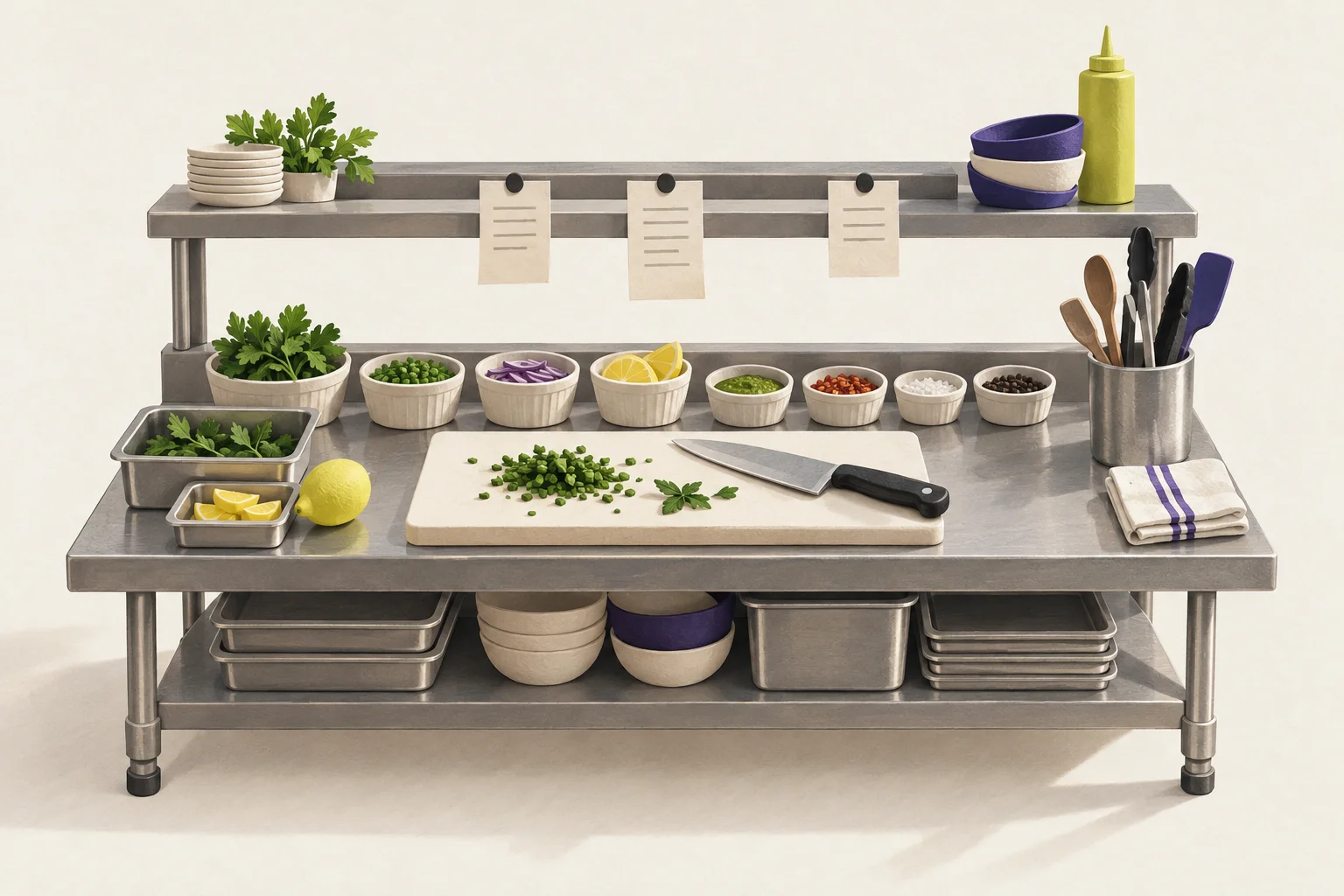
In a kitchen, service is not where cooks figure things out. The work happens before the orders land. When the ticket prints, they assemble from prepped parts. Your design–engineering meetings can run the same way. Prep tight. Plate fast. Move to the next order.
The kit: what to prep
One paragraph on the problem, user, and goal. Include the decision you need now.
Timebox, devices, latency, APIs, budget, compliance, and accessibility that apply.
Facts you trust and the open questions that block a decision.
Small artifacts: a sketch, a microcopy draft, a token snapshot, or a short clip. Keep them light.
Simple checks that say done/not done. Tie them to user outcomes and constraints.
Two minimal, viable alternatives if the main path is blocked.
Steps to run service-style touchpoints
Book 15–30 minutes with only the people who can decide or are needed to act. State the decision goal in the invite.
Draft the six pieces above. Trim anything that is not needed for the decision at hand.
Send the kit 24 hours ahead. Ask for async notes on gaps or red flags. Fold them in.
Open with context. Then constraints. Then knowns/unknowns. Then samples. Then decide. Keep the clock visible.
Record the choice, owners, acceptance tests, and due dates. Say what will be explored if blocked.
Convert unresolved items into tickets or small experiments with owners and timeboxes. No long threads.
Use this 30‑minute script
Problem, user, decision to make. One para. No backstory.
Devices, latency, APIs, compliance, accessibility. Name blockers.
Walk the samples. Invite engineer and designer to stress and tune.
Pick a path. Create tickets for work and for open questions.
Read back tests. Confirm owners and dates. State fallbacks.

Old meeting vs service-style touchpoint
| Stalled meeting | Service-style touchpoint |
|---|---|
| Live discovery by committee. Long backstory. | Prep done async. Meeting starts at decision time. |
| Context gets lost between threads and files. | Single kit holds context, constraints, and tests. |
| Specs form in chat. Owners unclear. | Decisions recorded. Tickets and owners created. |
| Engineering constraints surface after design. | Constraints are read up front and guide options. |
| One path or bust. Rework when it fails. | Fallbacks ready. Progress even with uncertainty. |
Pre‑flight checklist
- Write the decision you want in one sentence.
- Draft the six kit items. Cut fluff.
- Flag the two riskiest unknowns.
- Draft two fallback options.
- Pick owners who can decide and act.
- Share the kit. Ask for async red flags and quick estimates.
- Inline responses into the kit. Close easy gaps.
- Confirm the timeboxes and who speaks to which parts.
- Follow the fixed order. Keep the clock visible.
- Stop backstory. Park new research needs as tickets.
- Read back the decision, tests, owners, and dates.
Worked example: onboarding flow kit
This example shows the prep for a new onboarding flow. It includes the items that let design and engineering decide in one short session.
Persona card: first‑time self‑serve user who signs up without sales. Goal: improve completion of the first session and reduce early drop‑off. Decision needed: confirm the key interaction pattern and the first release scope.
- Three success metrics for onboarding completion and early activation.
- Used to check acceptance and to pick trade‑offs.
- Current funnel heatmap to show where users stall.
- Short clips of two real sign‑ups (with consent) to show friction points.
- Device and latency constraints for first load and critical actions.
- API gap list for missing endpoints and rate limits.
- Design token snapshot for spacing, color, and motion.
- Accessibility requirements relevant to forms and focus.
- Two low‑fidelity flows: progressive form vs staged cards.
- Microcopy draft for empty states and errors.
- Complete onboarding within the target time on a mid‑range device.
- Pass keyboard navigation and screen reader checks for critical steps.
- Recover from one common error without starting over.
- Fallback A: email‑first capture with deferred profile setup.
- Fallback B: one‑tap third‑party sign‑in with minimal fields.
Share this kit a day before the meeting. Ask engineering to mark any API gaps that block both main and fallback paths. Ask design to call out token or layout conflicts. Fold their notes into the kit so the session starts on the same page.
Run the meeting with the example kit
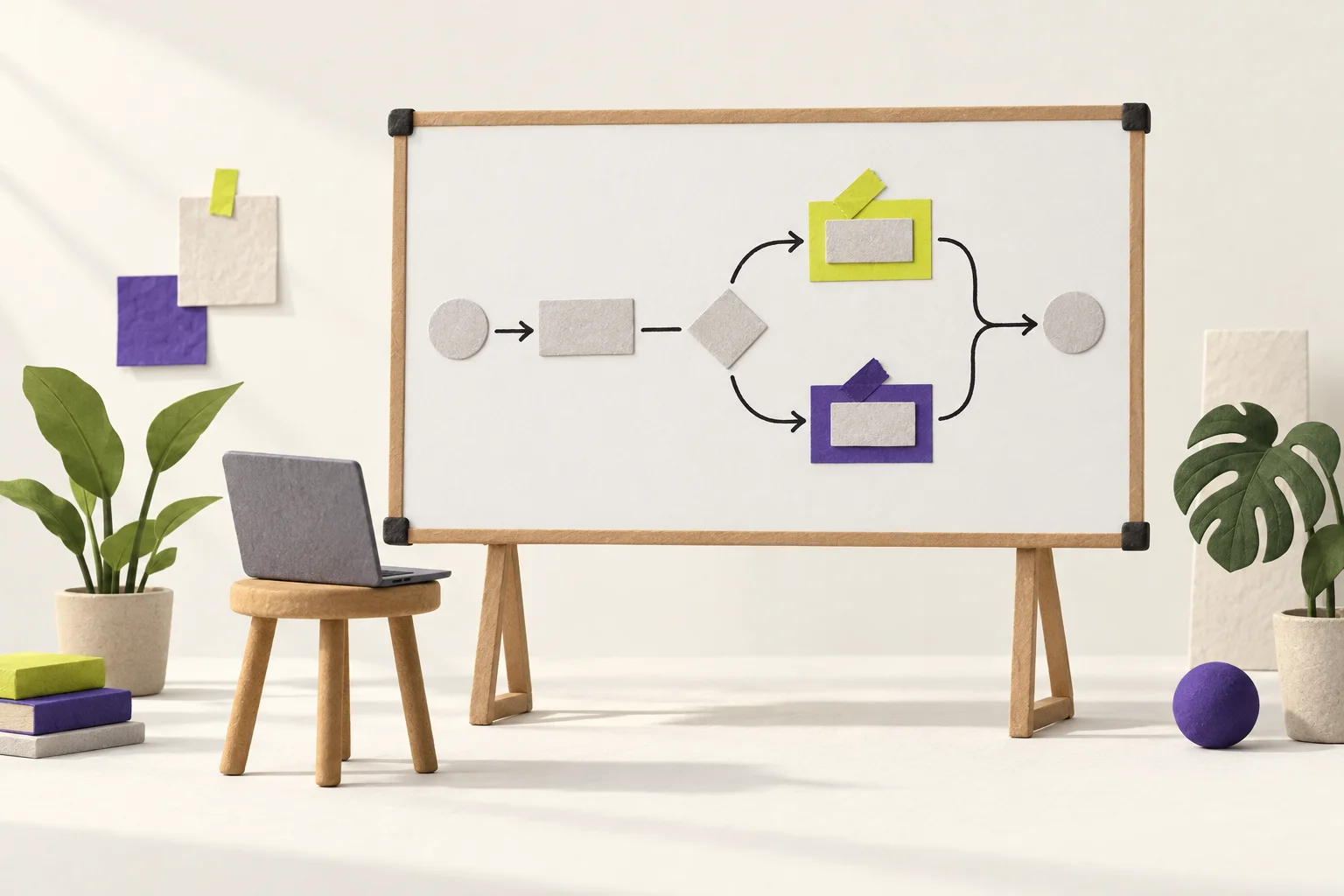
- 5 min Context: Read the persona card and goal. Name the decision: progressive form or staged cards for the first release.
- 7 min Constraints & blockers: Review device/latency, API gaps, tokens, and accessibility. Mark any must‑fix before build.
- 8 min Propose + critique: Walk the two flows and microcopy. Engineering calls out load and error handling. Design checks tokens and focus states.
- 5 min Decision & tickets: Pick a path for v1. Create tickets for the selected flow, API gap fixes, and a small experiment on the dropped option.
- 5 min Acceptance & owners: Read the three acceptance tests. Assign owners for build, copy, and accessibility checks with dates.
Mistakes to avoid
Do not write the whole spec. Keep samples light so design and engineering can still iterate.
Do not paste long studies. Synthesize into the kit. Link out only if someone needs depth later.
Do not wait until after design to learn about devices, latency, or APIs. Put constraints up front.
Use the kit as a shared baseline. Invite critique. The goal is speed with quality, not control.
Stop long threads. Turn open questions into tickets or experiments with owners and timeboxes.
What you leave with
One prep kit that fits on a page. A fixed 30‑minute script. A decision, plus tickets or experiments for what is left. Repeat next touchpoint like service. Ship, do not stall.