Run meetings with a one‑pager, not a status update
A step‑by‑step guide to run planning, reviews, and retros as decision factories using a single one‑pager and a strict 20/40 cadence.

This guide is for busy product managers who run planning, reviews, and retros often. If your calendar is full but little changes after each meeting, use a single one‑pager and a strict cadence to turn every ritual into decisions and experiments. At the end, you will have a reusable template, a timing plan, and a way to trace outcomes across cycles.
Run meetings as decision factories, not status slots.
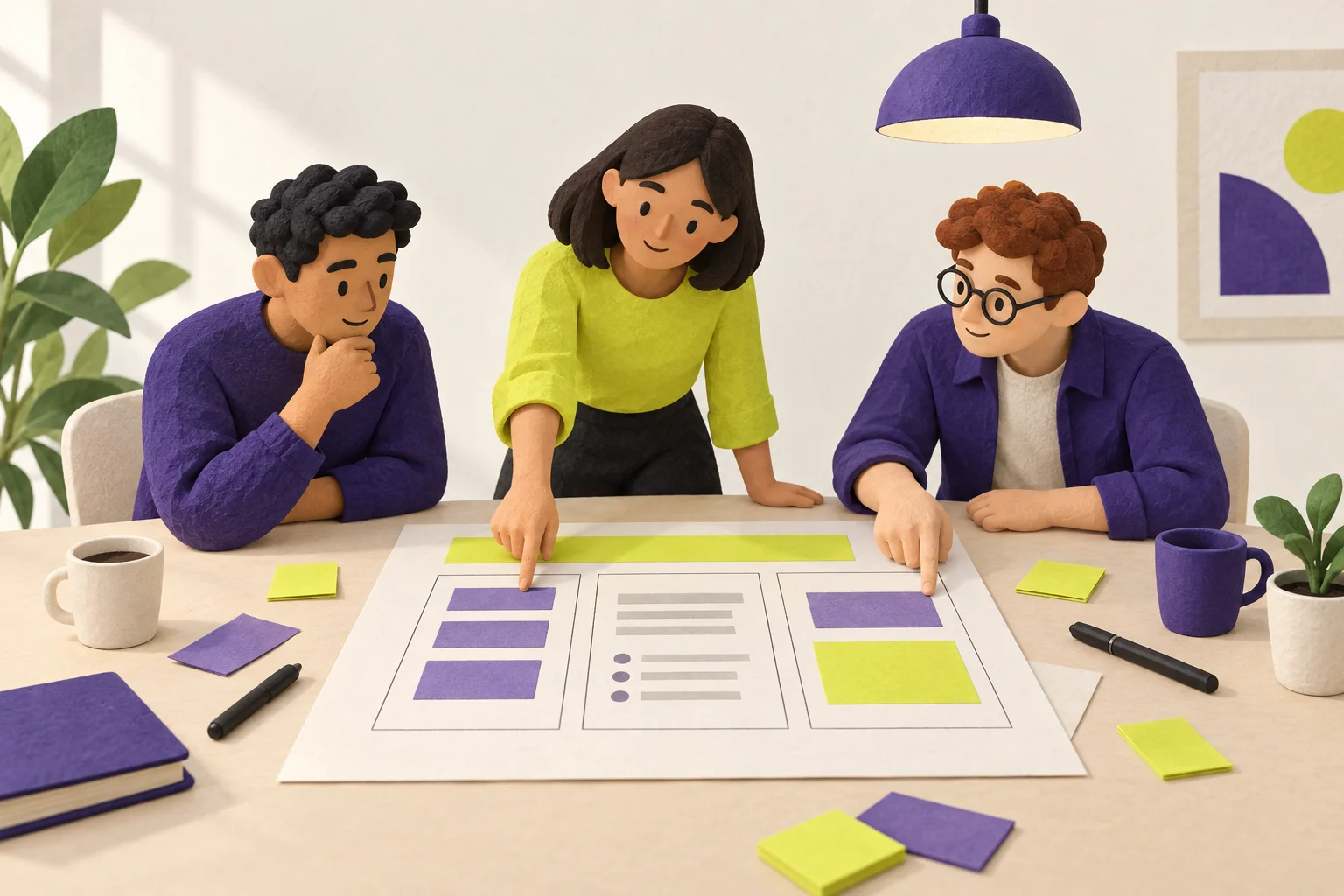
Who this is for and what you get
For
- PMs running frequent planning, reviews, and retros.
- Teams where action items fade and learnings do not shift priorities.
- Leads who want traceable decisions and comparable outputs across rituals.
Outcomes
- A rigid one‑pager template that forces clarity.
- A 20/40 minute meeting cadence that protects decision time.
- A trail of experiments and owners you can audit and reuse.
Set up the one‑pager artefact
Use one page only. It should be the same across planning, reviews, and retros. The fields are fixed:
- Trigger: why we are here now.
- Evidence: the smallest set of metrics and facts needed to choose.
- Options: the real paths we could take.
- Decision: the choice the group makes.
- Owner: one accountable person by role.
- Next experiment: the smallest measurable step to learn or deliver.
Keep the language concrete. Evidence is metrics and observed facts, not opinions. Options are mutually exclusive enough to force a pick.
The 20/40 cadence
Prepare 20 minutes of evidence
- Draft the one‑pager before the meeting starts.
- Evidence means only what moves a decision. Cut status and commentary.
- Make charts simple or describe results plainly. No detours.
Open with the trigger
- State the trigger in one sentence. Example: "Sprint review: decide the next step for the retention experiment."
- Confirm the fields on the one‑pager are present before discussion starts.
Walk the evidence quickly
- Use up to 20 minutes. Keep questions to clarification only.
- Defer deep dives that do not change the choice today.
Frame options and trade‑offs
- List 2–3 options directly on the one‑pager.
- Note the main risk and expected result for each.
Decide in 40 minutes
- Pick one option. Name one owner by role.
- Write the next experiment as a testable change tied to a metric.
- Agree when you will review the result (the next relevant ritual).
Store and reuse
- File the one‑pager where the team can find it.
- Start the next meeting by pulling the last one‑pager and closing the loop.
You can use your own document or a tool. If you want a ready format, the One-pager keeps the fields above in one place.

How the one‑pager flexes across rituals
| Field | Planning | Review | Retro |
|---|---|---|---|
| Trigger | We must choose what to do next. | We must decide the next step on work just done. | We must address a recurring team or flow issue. |
| Evidence | Demand signals, constraints, cost of delay. | Outcome vs control or baseline, quality notes. | Cycle time, defects, handoff delays, sentiment. |
| Options | Start A, start B, or wait. | Continue, pivot, or stop. | Adopt, test, or drop a practice. |
| Decision | Pick the work that best fits the goal now. | Pick the path for the feature or experiment. | Pick one change to try next cycle. |
| Owner | Lead for the chosen body of work. | Lead for the next change or analysis. | Lead for the process change. |
| Next experiment | Spike, doc, or test to learn before a big bet. | Small, measurable change to improve the result. | Trial of a practice with a clear success check. |
Common mistakes to avoid
- Letting the template be optional. If there is no one‑pager, there is no agenda item.
- Filling it with opinions instead of metrics and observed facts.
- Turning the meeting into a status update. Status is for async.
- Skipping owner or next measurable experiment. Without these, nothing moves.
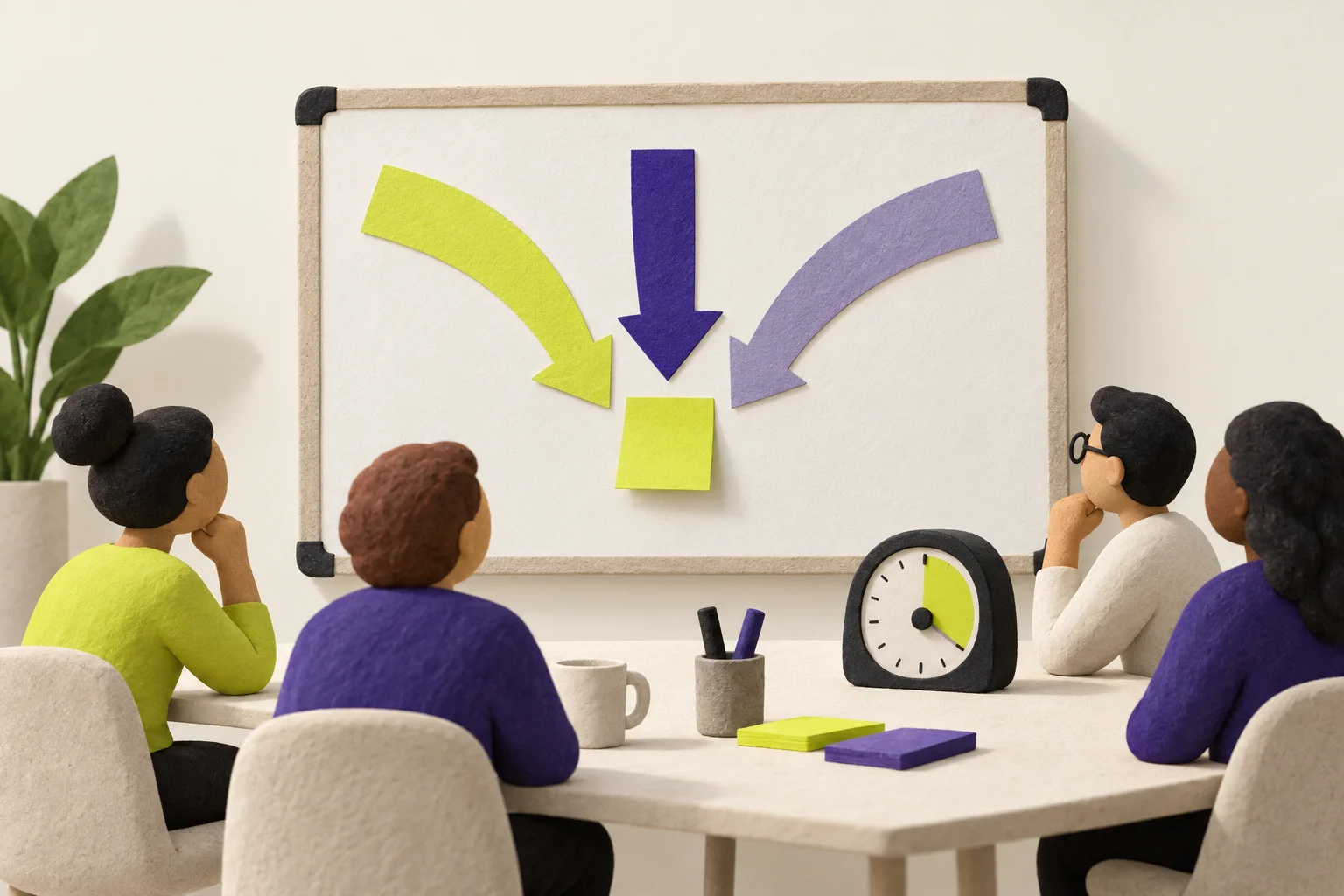
Worked example: a 2‑week sprint review
One‑pager: Retention experiment next step
- Activation and engagement patterns observed during the sprint.
- Qualitative notes from user conversations during the sprint.
- Delivery and quality notes relevant to the feature change.
2) Pivot the variant to target a narrower, high‑intent segment.
3) Kill the experiment and return to baseline.
The one‑pager stays the same next time. In the next review, pull this page first: confirm result vs control, then choose continue, pivot, or kill again.
Run it week after week
- Make the artefact mandatory. Decline topics without a filled one‑pager.
- Guard the 20/40 split. Evidence time ends. Decision time starts.
- Write decisions in the room. Do not leave blanks.
- Open each ritual with the last one‑pager’s owner reading back outcomes.
Do this across planning, reviews, and retros. The shape stays fixed, so choices compare and trace. Over time you build a ledger of decisions and experiments, not a stack of slide decks.