Stop Chasing 2‑Hour Blocks: A PM’s Guide
Long sacred deep-work blocks aren’t always right for PMs. Use energy-aware mode budgets, transitions, and patterns that fit real cross‑functional work.

Myth, busted: why the sacred block fails in PM work
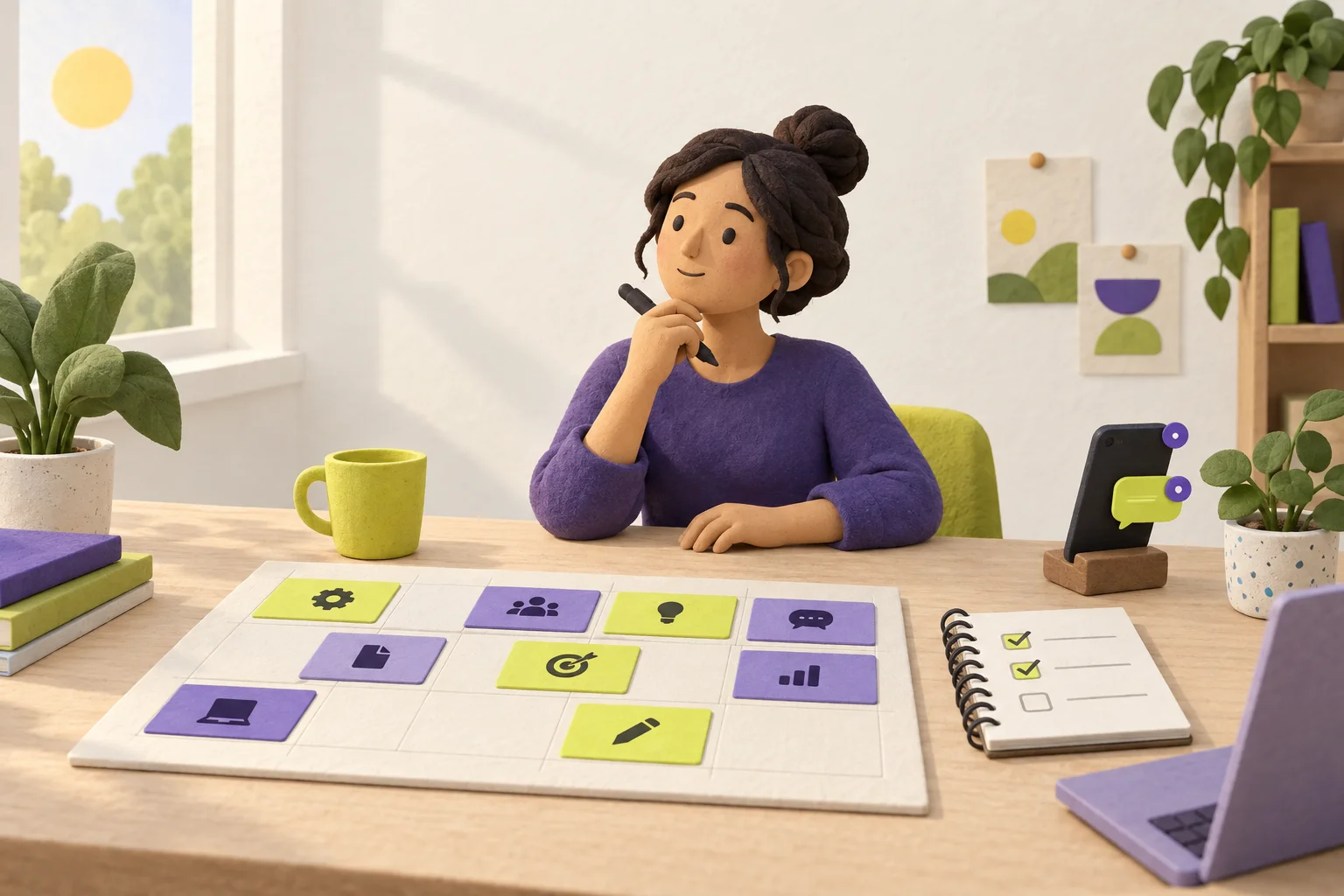
The two‑hour deep‑work block is useful for tasks like long analysis, complex writing, or systems design. But PM work also runs on fast handoffs, short decision windows, and feedback loops with engineering, design, and go‑to‑market. When you try to wall off a large block every day, three things often happen: you push decisions, you slow feedback, or you carry guilt when the block gets broken. Throughput drops and priorities blur.
The break point is role design, not discipline. If your success depends on frequent async updates, daily risk calls, and clearing blocks for others, a rigid block becomes a tax. What you can protect is not a fixed window, but your energy for the right mode of work at the right time.
Time is two resources: clock time and cognitive energy
Your calendar shows hours. Your brain runs on rhythms. You are sharper at some times, slower at others. You also pay a switching cost when you jump modes. The practical move is to guard energy peaks for focused work, and to place reactive and collaborative work where your energy naturally dips or where team availability is highest.
| Block‑first mindset | Energy + mode mindset |
|---|---|
| Protect a 2‑hour slot daily, same time. | Protect your highest‑energy windows, length varies by day. |
| Measure success by keeping the block intact. | Measure success by outputs, decisions made, and stress trend. |
| Meetings fill the gaps around the block. | Batch by mode: reactive, focused, collaboration. |
| Context switches are failures. | Switches are designed: short rituals and handoff anchors reduce cost. |
The core system: a daily mode budget
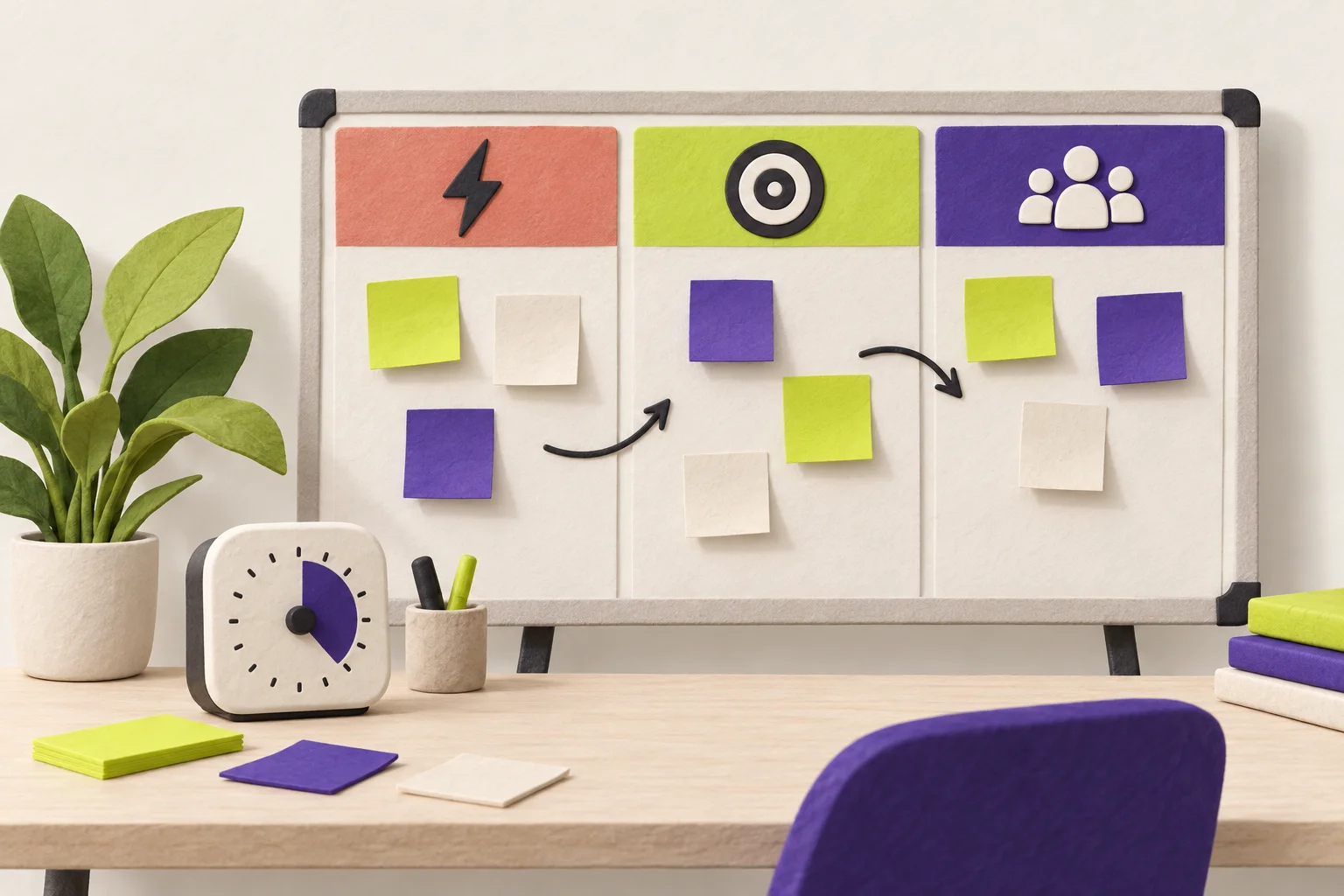
Split your day into three modes and size them to your energy curve.
- Mark 30‑minute energy levels across the day for one week: high, medium, low.
- Note fixed constraints: team standups, leadership reviews, school runs.
- List your high‑cognitive tasks for the week (writing, analysis, roadmap updates).
- Reactive: triage, quick replies, unblocks. Place near standups and inbox peaks.
- Focused: writing, analysis, specs. Place on your energy peaks.
- Collaboration: 1:1s, workshops, stakeholder syncs. Batch where partners are free.
- Micro‑deep: 3 × 35‑minute focus sprints with 10‑minute buffers.
- Noon fortress: one longer block at your daily peak, even if not two hours.
- Mode batching: cluster meetings together; protect one early and one late focus slot.
- 5‑minute pre/post checklists to lower switching cost.
- Low‑cost context captures: a running scratch doc, task headers, and next step one‑liners.
- Handoff anchors: standards for what you send to design, engineering, or stakeholders.
- Track outputs (docs shipped), decisions made, and perceived stress.
- Note interruption count and where it hit your energy peaks.
- Adjust mode sizes and patterns, not just meeting times.
Write your protocol in your personal development plan so you can revisit it each quarter as your team and scope change.
Transition rituals: make short focus add up
- Close chat, email, and tabs not needed.
- Open the doc and scroll to the section you will edit.
- Write the goal for this sprint in one line.
- Set a 35‑minute timer. Put phone face down.
- Write a one‑line next step at the top of the doc.
- Capture blockers in a tiny list.
- Log the outcome: draft started, section finished, numbers checked.
- Park the context: two bullets on what to do first next time.
- For design: problem statement, constraints, success criteria, latest decisions.
- For engineering: user story or job to be done, acceptance criteria, open risks.
- For stakeholders: decision needed, options, trade‑offs, recommended next step.
Anchors reduce back‑and‑forth and make shorter collaboration windows effective.
Scheduling patterns that fit PM reality
- Micro‑deep (3 × 35): Three focus sprints with buffers. Works when you face frequent pings but can protect short windows.
- Noon fortress: One longer block at your peak energy, which may be mid‑morning or early afternoon. Accept that some days it is 75–90 minutes.
- Mode batching: Stack meetings in one or two clusters. Protect a morning focus slot and a late‑day focus slot. Leave small reactive buffers around standups.
The pattern is less important than the alignment with your energy map and team rhythms. Keep the pattern stable for a week when you test it.
Worked example: a one‑week protocol
Below is a simple protocol you can run next week. It combines an energy map, a mode budget, a transition checklist, and a calendar template to test three patterns. Measure outputs, decisions made, interruptions, and stress.
- Mark each half‑hour next week as planned High / Medium / Low energy based on your usual rhythm.
- Note fixed anchors: standups, weekly reviews, key partner time zones.
- Focused: 2–3 slots per day on High energy windows.
- Collaboration: 1–2 clusters per day; keep a 10‑minute buffer to log decisions.
- Reactive: 2–3 short windows; one near standup, one late afternoon.
| Day | Pattern | Focus slots | Collaboration windows | Reactive buffers | Notes |
|---|---|---|---|---|---|
| Mon | Micro‑deep | 08:30–09:05, 11:00–11:35, 15:30–16:05 | 13:00–14:30 | 10:00–10:20, 16:10–16:30 | Buffer before planning sync |
| Tue | Noon fortress | 11:15–12:45 | 14:00–16:00 | 09:30–09:50, 16:10–16:30 | Peak energy midday |
| Wed | Mode batching | 08:30–09:45, 16:00–16:45 | 10:00–12:00 | 13:30–13:50 | Back‑to‑back partner syncs |
| Thu | Micro‑deep | 09:00–09:35, 11:30–12:05, 15:00–15:35 | 13:00–14:30 | 10:00–10:20, 16:10–16:30 | Doc day, keep context |
| Fri | Noon fortress | 10:30–12:00 | 14:00–15:30 | 09:30–09:50, 15:40–16:00 | Weekly review and planning |
Before each focus slot, run the 5‑minute pre‑focus list. After, run the post‑focus list and update handoff anchors as needed. Keep a single running scratch doc for the week. Start each focus slot by reading the top three lines in that doc.
- Outputs: count docs or sections shipped, and key decisions recorded.
- Interruptions: tally pings that pulled you mid‑focus.
- Stress: record a simple daily score: Low / Medium / High.
- Compare Mon/Wed/Thu (micro‑deep + batching) vs Tue/Fri (fortress).
- Next week, keep the winner and tweak mode sizes by 15–30 minutes.
Common mistakes to avoid
- Mistaking calendar protection for effectiveness. A perfect block does not matter if decisions slip and partners wait.
- Over‑optimizing one block and starving collaboration. Your team’s throughput is your throughput.
- Ignoring circadian peaks. Put focused work on your natural highs, not where a slot happens to be free.
- Not measuring impact. Track outputs, decisions made, and stress trend, not only hours sat in a block.
Putting it into practice
Start small. Protect just the next two high‑energy focus sprints on your calendar and cluster one meeting block. Use the transition lists and handoff anchors for one week. At the end, review your measures and adjust your mode budget. If you keep a personal development plan, write your protocol there so you refine it as your team and scope evolve.