Stop Chasing One-Click Activation
A practical guide to replace vanity activation clicks with repeat value metrics that link to retention and growth loops.
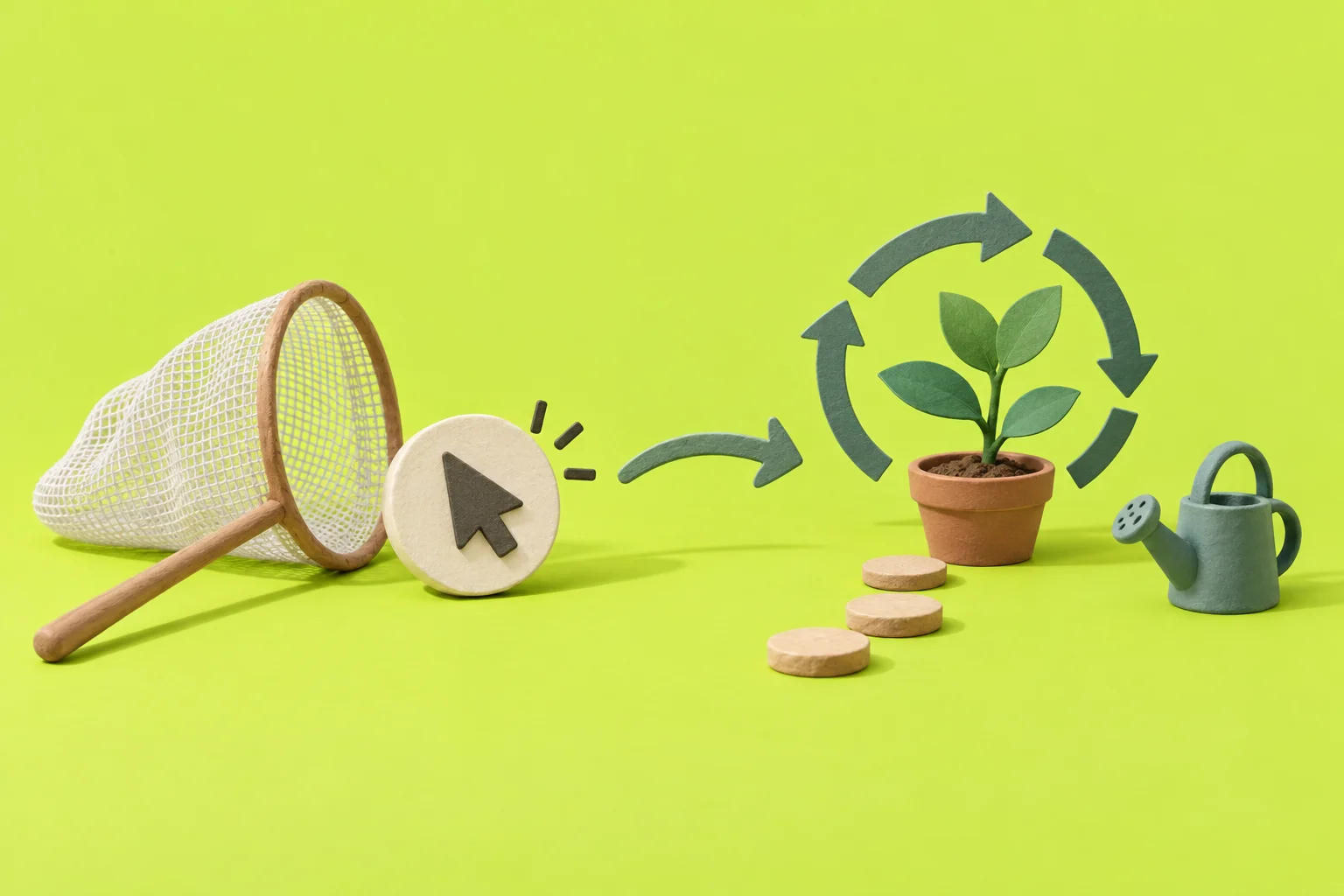
This guide is for working PMs who run activation experiments and growth loops. You will leave with a stronger activation definition, a measurement plan that ties to retention, and an experiment pattern you can ship this sprint.
- Activation is not a single click. It is a meaningful, repeatable value exchange.
- Measure activation by short-term repeat behavior and cohort retention.
- Activation feeds retention and loop inputs; it does not replace them.
- Instrument both the first action and evidence the user got value.
- If activation rises but nothing else does, check quality, friction, and loop incentives.
Myth, busted
Boosting one tracked activation action will not, by itself, lift retention or power growth loops.
A higher count of easy clicks can hide the fact that users did not get value and did not return.

1) Define activation as a value exchange
Activation should mean the user experienced value and is likely to come back for it. A one-time click is not enough. The core is a repeatable value exchange: the user does something and gets a benefit clear enough to do it again soon.
Write your activation definition with two parts:
- The value action: the thing that delivers the product’s core benefit.
- The repeat condition: a threshold that shows intent to return soon.
Examples of value actions depend on your product. For a notes app, it could be “created and retrieved a note.” For a marketplace, “viewed and messaged a seller.” Pair that with a repeat condition like “twice within 7 days.” Keep it about behavior, not UI completion.
2) Measure repeat behavior and cohort retention
Activation should predict near-term return. Track both:
- Short-term repeat: did the user perform the value action again within a set window (for example, 7 days)?
- Cohort retention: do users in the same start week come back on day 7 and day 30, and do they do the value action?
These checks keep you honest. A boosted first action that does not show up in 7-day repeats or 30-day cohort curves is not real activation.
| Vanity activation | Value-based activation |
|---|---|
| One-time UI clicks (signup, checklist done, import auto-filled) | Repeat value action within a window (e.g., used core feature twice in 7 days) |
| Optimizes for easy bumps, can mask low intent | Optimizes for early habit and real fit |
| Poor predictor of 30-day retention | Designed to predict cohort retention |
| Can feed spammy or low-quality loops | Improves loop inputs with higher-quality actions |
3) Treat activation as input to retention and loops
Activation should supply healthy inputs to your system, not stand in for outcomes. Map how an activated user flows into:
- Retention: repeat value actions that form a habit.
- Loop inputs: content supply, invites sent, payments started.
This mindset changes your targets. Instead of “raise checklist completion,” you aim to “increase 7-day repeat use” and “grow invites per retained user.” Activation is the first mile that fuels the rest.
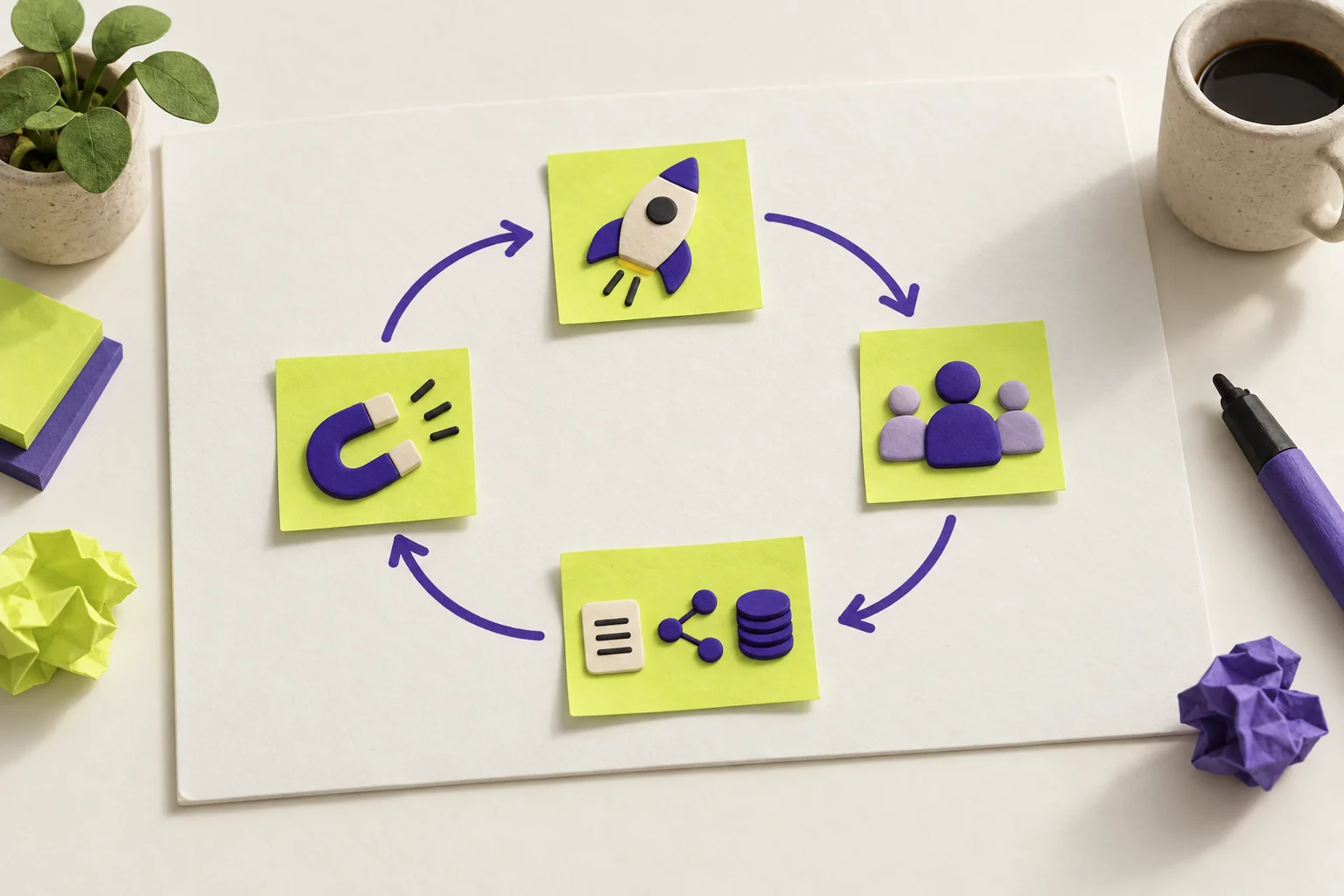
4) Design experiments that track first and follow-up behavior
Instrument both the spark and the flame. The spark is the first action. The flame is evidence the user got value and came back for more.
Choose the value action
Pick one behavior that delivers core value. Avoid UI-only milestones. Name it in your plan.
Set the repeat window
Pick a window that matches your product’s cadence. Weekly tools often use 7 days. Daily ones use 3 days or less.
Log both events
Track the first action and each repeat with timestamps and source (channel, persona). Store time-to-repeat.
Link downstream metrics
Attach cohort retention, invites per user, and paid starts to the same user IDs. Plan your comparisons upfront.
Pre-register your hypothesis
Write a one-liner: if we do X, then 7-day repeats and 30-day retention will rise for cohort Y. Use a Hypothesis card.
5) When activation rises but nothing else moves
Run a quick diagnostic before you ship more of the same. Three common causes show up again and again.
- User quality: did the mix shift? Compare by channel, persona, device, and region. Low-intent sources inflate first actions.
- Post-first friction: where do users stall after the first action? Look for setup gaps, empty states, and missing content.
- Loop incentives: are invites or content prompts too easy to fire and low quality? Low-quality loops hurt trust and retention.
- Segmentation: does one segment improve while another declines? Read results by persona, plan, and starting context.
- Definition drift: did the activation label move away from the value action? Re-center it on repeat behavior.

Worked example: from checklist clicks to repeat value
Current state: your team calls a user “activated” when they complete an onboarding checklist. Retention has not improved, and invite rate is flat.
New definition: activated = completed checklist + used feature X twice within 7 days.
Experiment design:
- Population: new users in the same acquisition channels and personas as last month.
- Randomize into two variants at signup.
Variants:
- Variant A (badge): keep the existing reward for finishing the checklist. Show a badge when done. No extra nudges to repeat use.
- Variant B (repeat nudge): remove the badge. Add a prompt to try feature X again within 48 hours. Add a contextual reminder inside feature X at the next session.
Instrumentation:
- Event 1: checklist_completed (timestamp, source, persona).
- Event 2: feature_x_used (timestamp, context). Count per user.
- Derived: repeat_within_7d = count(feature_x_used in 7 days) ≥ 2.
- Loop inputs: invites_sent, content_created, payments_started.
- Retention: d7_returned, d30_returned, both checked with feature_x_used presence.
Primary success metric: percent of users who meet the new activation definition (checklist + two uses in 7 days). Secondary: D30 retention and invites per retained user.
Readout plan:
- Compare A vs B on 7-day repeat. Expect B to outperform if the nudge drives real value use.
- For users who meet the new activation, compare 30-day retention and invites per retained user across variants.
- Segment by persona. Watch for segments where A lifts first actions but not repeats.
What to conclude:
- If A lifts checklist completion but not 7-day repeats, do not call it an activation win. It is a UI win.
- If B lifts 7-day repeats and improves 30-day retention or invite rate, adopt the new definition and ship more repeat-value nudges.
- If neither moves downstream metrics, revisit the value action or the nudge design. Check post-first friction.
Common mistakes to avoid
- Confusing vanity activation metrics (one-time clicks, autofilled imports) with value events.
- Celebrating a lift before cohort retention confirms a downstream effect.
- Letting growth loops amplify low-quality activations (spammy invites that erode trust).
- Ignoring segmentation. A lift in one persona can hide a decline in another.
Tie each activation bet to repeat value behavior first. Then check cohort retention and loop inputs. That is how activation supports durable growth.