Turn Copycat Features into an Advantage in One Week
A one-week, step-by-step play to reframe feature parity, run light evidence, and make a clear decision that defends growth and trust.

For product managers at fast‑moving B2B or B2C teams facing near‑term copycats. This is a hard week plan to win the room when a competitor ships your feature. At the end of the week you will have a three‑part one‑pager, light evidence from real users, a clear binary decision with trade‑offs, and a short go‑to‑market script that defends near‑term ARR.
- Stop debating features. Defend a constrained, valuable trade‑off: what you keep, what you remove, and who benefits.
- Use a three‑part one‑pager on Monday: competitor claim, user scenarios that matter, and decision trade‑offs (cost, risk, growth).
- Run a one‑week evidence sprint: 3 interviews, 2 rapid tests, 1 cost estimate, then a GTM script.
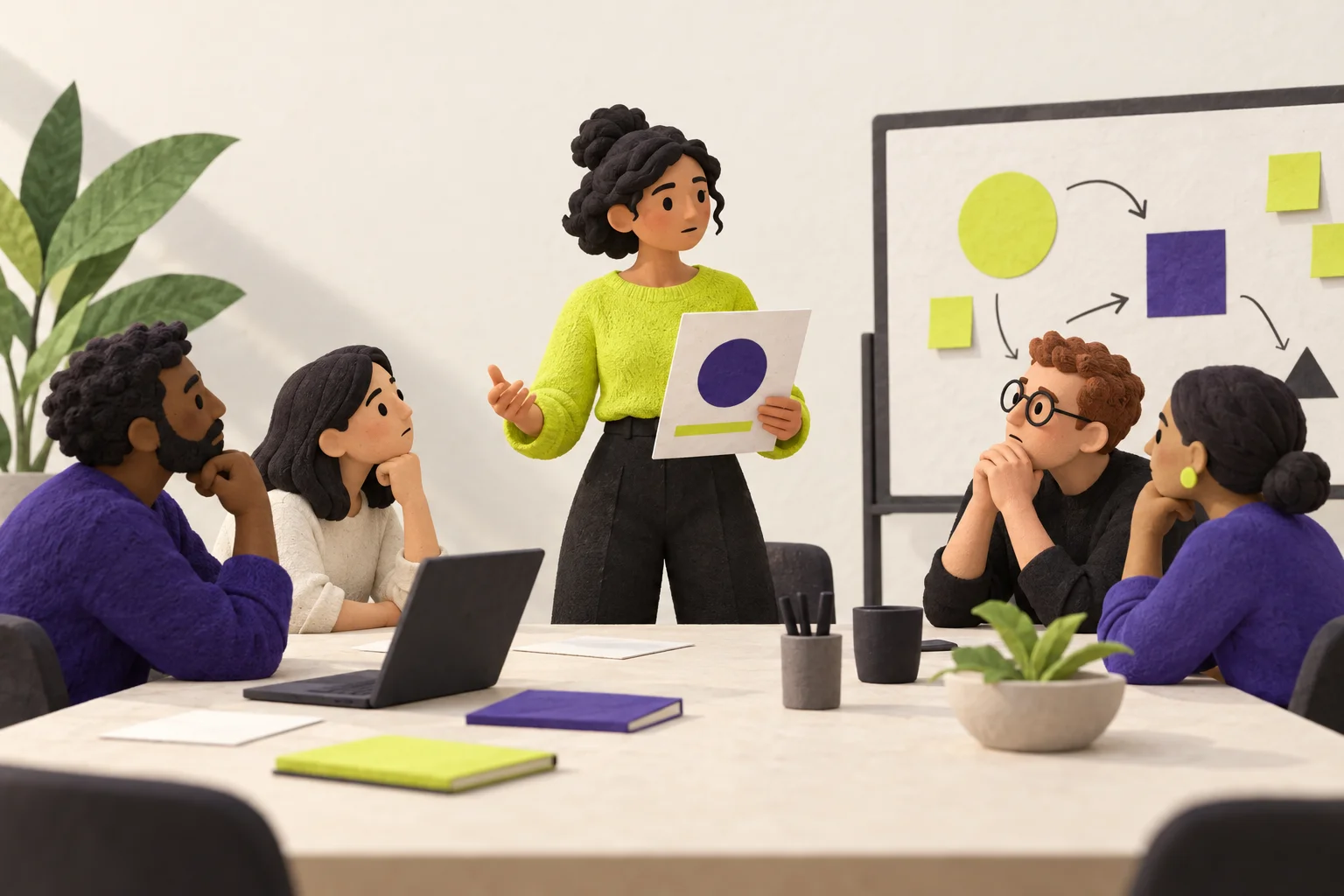
The hard week at a glance
Open with the user scenario that matters, not the feature. State the competitor claim. Frame two clear options and the trade‑offs.
One core user in the target scenario, one buying admin, one power user. Ask about outcomes, not features. Capture quotes that show who wins and who loses.
One desirability or comprehension test on your constrained approach. One feasibility or risk spike on the riskiest assumption.
Get an engineering estimate for both options. Put costs next to benefits and risks. Propose a binary decision with two clear outcomes.
Draft a short talk track for Sales, CS, and Support. Define how you defend ARR in the next 90 days with your chosen path.
The three‑part one‑pager
Bring one page to the Monday meeting. Make it visual and blunt. Use a template or a simple doc. If you need a starting point, use the PikoPM One‑pager.
- Competitor claim: one sentence in their words. What they say users now get.
- User scenarios that matter: two or three short scenes. Who, where, and what outcome they need. Tie to revenue or risk where relevant.
- Decision trade‑offs (cost, risk, growth): Option A vs Option B. Who wins, who loses, what it costs, and what it buys you in 90 days.
Lead the room with the scenario, not the feature
Features trigger status debates. Scenarios anchor on value. Run this sequence:
- Start with the primary scenario and the moment of pain. Two sentences.
- State the competitor claim once. No demo, no screenshots.
- Show who wins and who loses with each option. Use plain language.
- Offer a low‑risk pilot to prove the benefit fast.
- Ask for a binary decision with two clear outcomes.
"We can match this, but here’s who wins and who loses."
Use this to reset the debateThen add: "Here’s the low‑risk pilot that proves the user benefit." Close with: "If we don’t, here’s how we defend ARR in 90 days." Keep it short.
| Decision | Match feature fully | Constrained trade‑off now |
|---|---|---|
| What we ship | Like‑for‑like parity as fast as possible. | Focused version that fits our strategy; a gated pilot to prove value. |
| Who wins now | Prospects swayed by checklists; some power users. | Target users in the key scenario; buyers who care about cost, risk, or control. |
| Who loses now | Teams who value reliability, privacy, or admin control if rushed quality slips. | Checklist buyers who want perfect parity this week. |
| Evidence by Friday | Feasibility only; user value still an assumption. | 3 interviews, 2 tests on value and risk, and a costed plan. |
| Cost this quarter | High and front‑loaded; displaces roadmap bets. | Lower; staged and reversible. |
| Risk | Scope creep; hidden edge cases; quality debt. | Partial coverage risk; mitigated by pilot and policy. |
| 90‑day ARR defense | Defend deals that demand parity; weak story for others. | Clear story for target segments; proof points for field teams. |
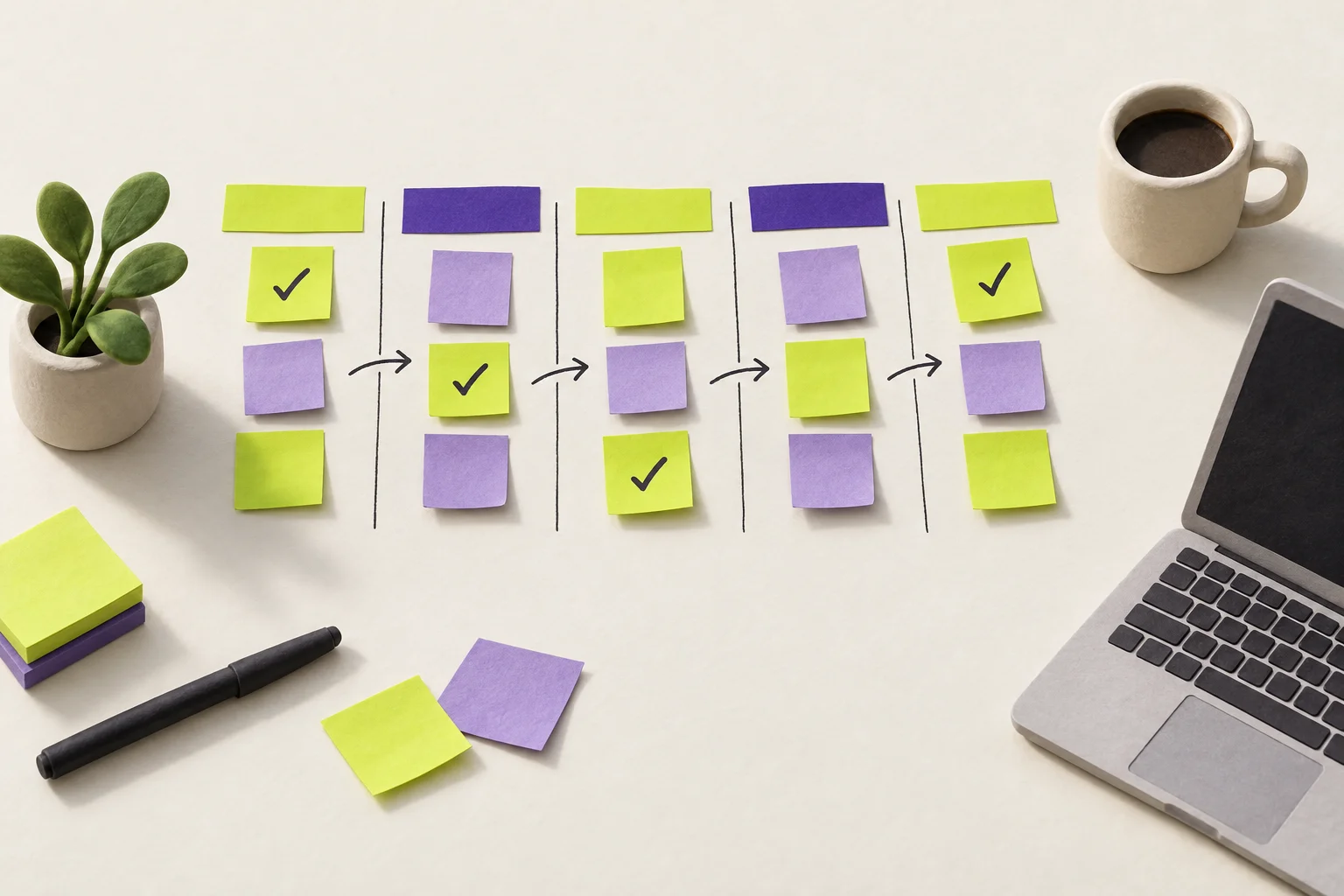
The one‑week evidence sprint: numbered steps
- Write the competitor claim in one line.
- List 2–3 user scenarios tied to revenue or risk.
- Draft Option A vs Option B with cost, risk, growth notes.
- Tell the scenario first; keep it concrete.
- Show the binary choice. Ask for a 4‑day evidence window.
- Secure who will join calls and tests.
- Core user in the key scenario.
- Admin or security buyer.
- Power user who pushes the edge case.
- Value test: prototype or message test on your constrained path.
- Risk or feasibility spike: the scariest technical or policy edge.
- Put engineering hours against both options.
- Show trade‑offs beside cost. Decide and document.
- Three talking points for Sales and CS.
- One slide that shows who wins and who loses.
- How you defend ARR in 90 days.
Checklist to keep you out of the ditch
- Do not defend features in the abstract. Anchor on a user scenario and the outcome.
- Avoid vague metrics. Define a clear signal for success by Friday (e.g., percent of target users who opt in, or admin acceptance in pilot accounts).
- Do not let engineering own the trade‑off alone. PM frames the decision in cost, risk, and growth terms.
- Timebox the week. Book the three calls on Monday; block build and review hours.
- Keep options binary. Two paths only. No third mushy middle.
- Write the decision log. One paragraph, shared with stakeholders.
Worked example: competitor ships “instant sync”
Your competitor announces instant sync across devices. The room wants parity. Use a one‑pager to turn parity into advantage.
- Competitor claim: Instant, always‑on sync across devices so work is never out of date.
- User scenarios that matter:
- Field user on mobile with spotty network needs the latest file before a client meeting.
- IT admin at a regulated customer needs control over background data movement.
- Power collaborator on desktop wants live co‑editing during peak hours.
- Decision trade‑offs:
- Option A: Full instant sync — Pros: checklist parity; smoother power workflows. Cons: battery drain on mobile, more background data transfer, less admin control over timing and networks.
- Option B: Constrained sync pilot — Pros: protects battery and privacy; gives admins policy toggles; serves power users in defined cases. Cons: not parity in every scenario; checklist buyers may push back.
Lead the Monday meeting with the mobile field scenario. Say: "We can match this, but here’s who wins and who loses." Then: "Here’s the low‑risk pilot that proves the user benefit." Close with: "If we don’t, here’s how we defend ARR in 90 days."
- Field user: Would they trade some battery for guaranteed freshness? When and where?
- IT admin: What policy levers matter? Networks (Wi‑Fi only), hours, device state?
- Power collaborator: Is on‑demand refresh during co‑editing good enough if it is one tap?
- Value test: Prototype a “Smart Sync” control. Defaults to manual refresh with an opt‑in for instant sync on Wi‑Fi and when charging. Test comprehension and preference.
- Risk spike: Instrument a small build to measure battery impact of background checks vs on‑demand pulls in a narrow case. Or mock policy enforcement to confirm admin acceptance.
- Full instant sync estimate vs constrained pilot estimate, both with QA and rollout.
- Decide: ship gated pilot to power users with admin toggles and Wi‑Fi/charging guardrails.
Friday GTM script
- Talk track for Sales and CS:
- Open with the field scenario. Name the benefit users feel this week.
- Message the trade‑off: instant when it matters; control and privacy by default.
- Offer the pilot to power users and regulated customers with admin controls.
- Objection handling:
- If someone asks for full parity: explain who wins and who loses with it, and when you will revisit after pilot data.
- Security questions: describe policy toggles, audit logging, and network restrictions in the pilot.
- ARR defense in 90 days:
- Retain power users via pilot access and visible progress.
- Protect regulated accounts with admin control as a strength.
- Use pilot outcomes to decide on broader rollout or to hold position.

Close the loop
Send the updated one‑pager, interview notes, test readouts, cost estimate, and the decision log to stakeholders. Confirm the binary choice and next steps. Add owners and dates. Keep the room focused on the trade‑off you chose and who it serves. That is how parity becomes an advantage.